
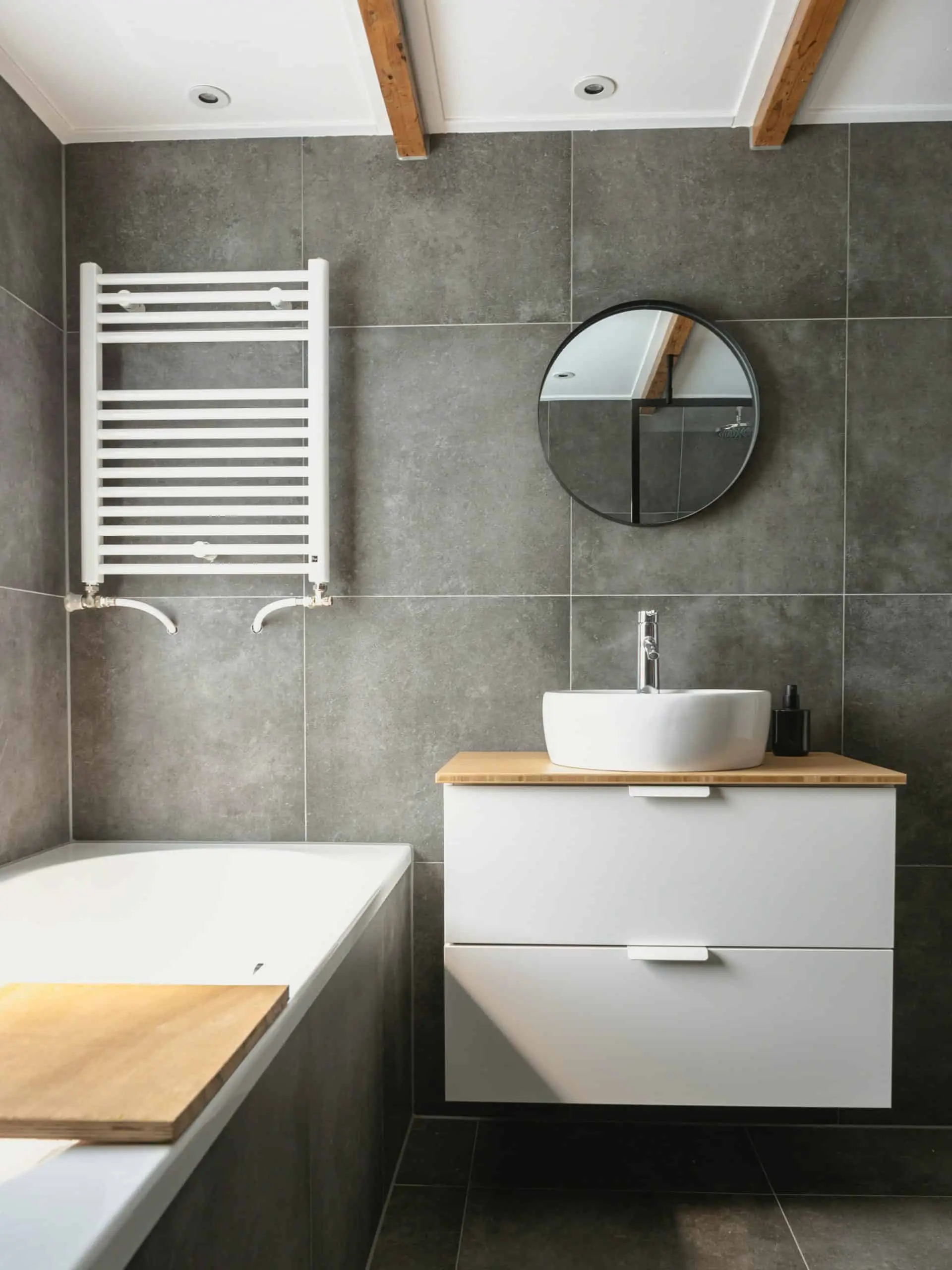
Bathroom Exhaust Fan Malaysia: Reduce Humidity, Mould & Bathroom Odours
Bathroom exhaust fans help remove humid air, reduce lingering odours, and improve airflow in bathrooms that stay damp after showering. For many Malaysian condos and windowless toilets, proper ventilation can reduce condensation, mould growth, and moisture build-up before they become bigger maintenance problems.
What Does a Bathroom Exhaust Fan Do in Malaysian Bathrooms?
A bathroom exhaust fan pulls humid air out of the toilet or bathroom so moisture does not stay trapped after showers. In Malaysia's humid climate, especially in Kuala Lumpur, Petaling Jaya, Shah Alam, Subang Jaya, and other Klang Valley condo areas, damp air can linger on walls, ceilings, mirrors, cabinets, and tile grout long after the bathroom looks dry.
Good ventilation does not replace waterproofing, proper drainage, or cleaning, but it helps reduce the conditions that allow mould, odours, and condensation to build up. This is especially useful in condos, apartments, and internal bathrooms where windows are small, blocked, or not available.
If the bathroom already has ceiling stains, damp patches, or water seepage, the issue may not be ventilation alone. For leak-related problems, compare this guide with Bathroom Waterproofing Malaysia and Bathroom Waterproofing Cost Malaysia.
Signs Your Bathroom May Need an Exhaust Fan
If your bathroom feels humid long after showering, develops recurring mould, or traps unpleasant odours, poor ventilation may be contributing to the problem. An exhaust fan helps remove moisture before it settles on walls, ceilings, grout lines, and cabinetry.
Windowless or poorly ventilated bathrooms
Internal toilets and small condo bathrooms often need mechanical ventilation because natural airflow is too weak to remove humidity quickly.
Musty smells
If the bathroom smells damp even after cleaning, the room may be holding humid air behind fittings, ceilings, or enclosed areas.
Mould and damp walls
Recurring mould, damp grout, and wet wall surfaces often mean the bathroom needs better moisture removal after showers.
Bathroom Exhaust Fans for Klang Valley Condo Bathrooms
Condo bathrooms in Kuala Lumpur, Petaling Jaya, Shah Alam, Subang Jaya, and other Klang Valley areas often have limited natural airflow. Internal bathrooms, compact layouts, false ceilings, and shared service ducts can make exhaust fan planning more important than simply choosing a fan size.
Many homeowners only start looking at bathroom ventilation after mould, condensation, or persistent odours appear. Planning ventilation during renovation is usually simpler and less disruptive than retrofitting ducting after the bathroom is complete.
Before installation, check whether the bathroom has an existing duct route, ceiling access, nearby electrical point, and a suitable discharge path. In condos, management rules may also affect wall coring, external grilles, working hours, and where humid air can be vented.
Internal condo toilets
Bathrooms without windows usually need mechanical ventilation because steam and odours have no direct escape route after daily shower use.
Service duct route
The fan should push humid air into a suitable exhaust route, not into a closed ceiling void where condensation can build up unseen.
Management restrictions
Some condos control hacking, wall coring, work timing, and external façade changes, so ventilation planning should happen before renovation work starts.
Common Bathroom Exhaust Fan Types Used in Malaysia
The best bathroom ventilation fan depends on where the air can be discharged. Some bathrooms can vent directly through an external wall, while others need ceiling ducting, window-mounted fans, or a route into a service yard or approved exhaust path.
Ceiling exhaust fan
Common for bathrooms with false ceilings or ceiling access. It usually needs ducting so humid air is moved out instead of trapped above the ceiling.
Wall-mounted fan
Suitable when the bathroom wall can discharge air directly outside. This can be simpler when there is an external wall and no long ducting route.
Window exhaust fan
Useful for selected older bathrooms with existing windows. It may be practical when wall hacking or ceiling ducting is not ideal.
How to Choose the Right Bathroom Exhaust Fan
Choosing a bathroom exhaust fan is not only about buying the strongest fan. The fan must suit the room size, moisture load, ducting route, ceiling condition, electrical point, and how quietly you want it to run during daily use.
Bathroom size and layout
Larger bathrooms, enclosed shower areas, and windowless toilets usually need stronger airflow than small bathrooms with direct window ventilation.
Ducting path
Air should be discharged to an appropriate outside or approved exhaust path. Venting humid air into a closed ceiling can create new dampness problems.
Noise level
A quieter bathroom ventilation fan is usually better for ensuite toilets, bedrooms, and condos where fan noise can become annoying at night.
Electrical point and switch
The installer may need to check power supply, switch location, ceiling access, and whether the fan should run separately from the bathroom light.
Moisture and mould condition
If mould or dampness is already present, ventilation can help reduce recurrence, but leaks and waterproofing failures should still be checked separately.
Best Time to Install a Bathroom Exhaust Fan During Renovation
The best time to install a bathroom exhaust fan is before ceiling works, electrical finishing, and final tiling are completed. Planning early makes it easier to hide ducting, choose the right switch position, and avoid extra hacking after the bathroom is already finished.
Before ceiling works
Plan the fan location and duct route before plaster ceiling or access panels are closed, especially in condo bathrooms with limited service space.
Before electrical finishing
Decide whether the fan should share the light switch, use a separate switch, or include a timer before wiring and switch plates are finalised.
During full bathroom renovation
When hacking, ceiling work, tiling, and electrical planning happen together, the exhaust fan can be integrated more neatly into the renovation scope.
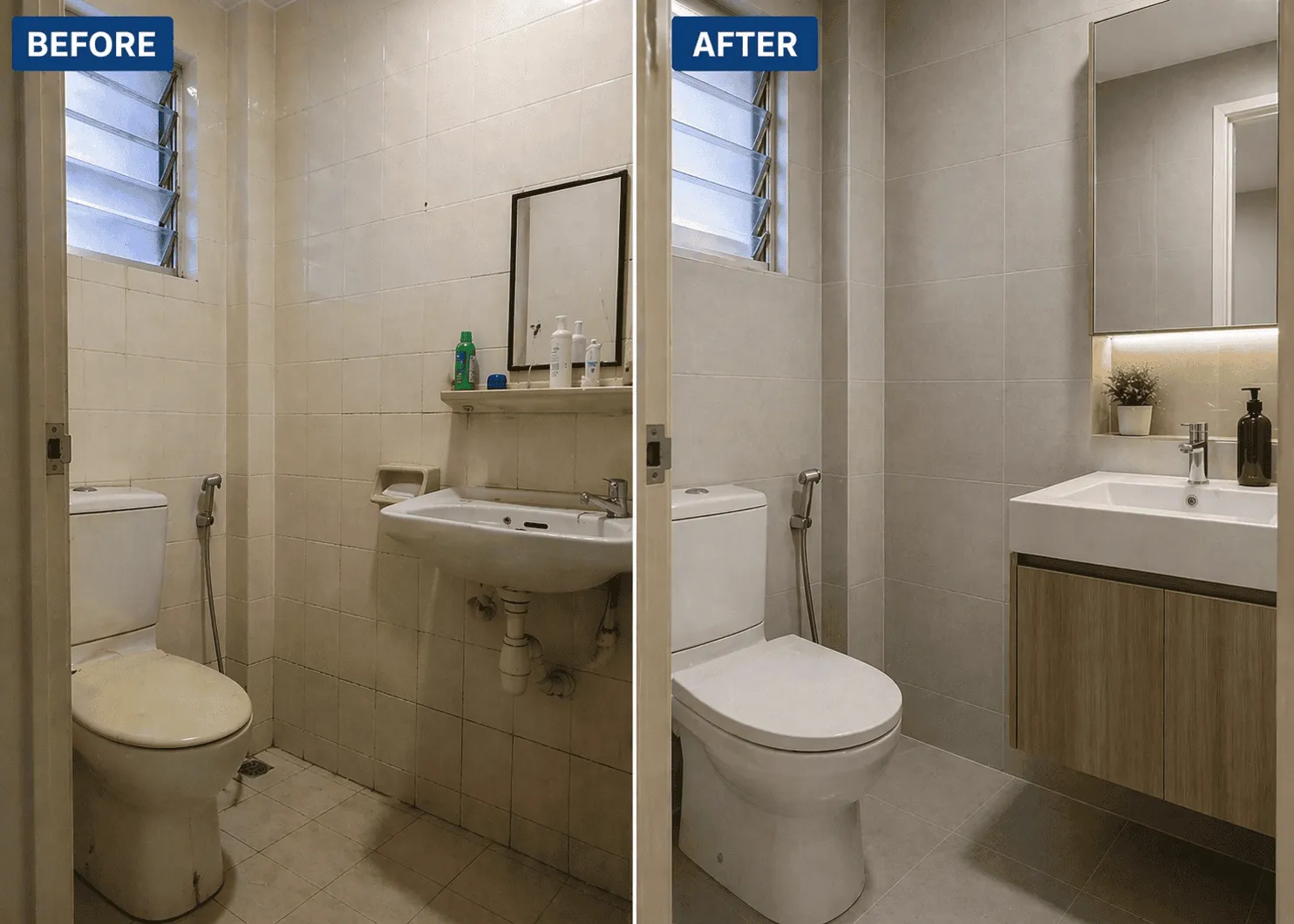
A Window Helps, But Most Bathrooms Still Need a Fan
Even bathrooms with natural light and a window often still need mechanical ventilation once the shower is enclosed and airflow is limited.
What Affects Bathroom Exhaust Fan Installation Cost in Malaysia?
Bathroom exhaust fan installation cost in Malaysia depends on the fan type, ducting requirements, electrical work, ceiling access, and whether installation is being carried out as part of a larger bathroom renovation. A simple replacement of an existing fan is usually less complex than installing a new system that needs wiring, ceiling cutting, wall coring, ducting, and a proper discharge route.
Installation costs vary significantly because some bathrooms already have wiring and duct routes in place, while others require new electrical points, ceiling access, ducting, and discharge modifications.
Fan supply cost
Basic toilet exhaust fans can be more affordable, while quieter models, stronger airflow, branded units, and timer or humidity-sensor options cost more.
Installation complexity
Costs rise when new ducting, ceiling cutting, wall coring, switch wiring, or access work is needed to route humid air properly outside.
For homeowners already renovating a bathroom, it is usually easier to plan the ventilation fan before tiling, ceiling works, and electrical finishing. If you are planning the wider renovation sequence, see Bathroom Renovation Process Malaysia and Bathroom Renovation Cost Malaysia.
Common Bathroom Ventilation Mistakes
Even a high-quality bathroom exhaust fan can perform poorly if airflow, ducting, or installation planning is overlooked. The most common mistakes happen when ventilation is treated as an afterthought rather than part of the overall bathroom design.
Venting into ceiling space
If humid air is pushed into a closed ceiling void instead of outside, condensation and mould may simply move to another hidden area.
Choosing a weak fan
A small or weak fan may not clear humid air quickly enough, especially in bathrooms with enclosed showers or no windows.
Planning too late
Adding the fan after renovation may require extra cutting, wiring, ceiling changes, or visible trunking that could have been avoided earlier.
Exhaust Fan, Waterproofing Repair, or Both?
Many homeowners assume a damp bathroom automatically needs an exhaust fan. In reality, some problems are caused by trapped humidity, while others are caused by waterproofing failures, leaking pipes, or drainage issues. Identifying the cause first helps avoid unnecessary work.
An exhaust fan usually helps
- Mirror fog after showers
- Musty bathroom smell
- Humid air that stays trapped
- Slow-drying walls or grout
- Odours in windowless toilets
An exhaust fan will not fix
- Ceiling leak below bathroom
- Failed waterproofing membrane
- Pipe or floor trap leakage
- Water seepage into nearby rooms
- Complaints from the unit below
Reality: If your bathroom matches the left list, ventilation alone may solve it. If it matches the right list, treat it as a waterproofing or plumbing issue and get it inspected before assuming a fan will fix it.
Ventilation Problem or Waterproofing Problem?
Poor ventilation and waterproofing failure can look similar at first. Damp smells, mould, ceiling stains, and peeling paint may be caused by trapped humidity, but they can also be signs of leakage behind tiles, failed waterproofing, or pipe issues.
As a general guide, ventilation addresses humidity and airflow issues, while waterproofing investigations are more appropriate when water is escaping beyond the bathroom itself. Ceiling stains below the bathroom, water marks on nearby walls, recurring leaks, or complaints from the unit below are usually signs that further waterproofing or plumbing checks may be needed.
Likely ventilation issue
Mirror fog, odours, humid air, and mould that improves when the room is aired out usually point toward poor airflow.
Possible waterproofing issue
Ceiling stains, wet patches, cracked grout, or complaints from the unit below may require waterproofing or pipe checks instead of only adding a fan.
If your bathroom has leakage symptoms, read Bathroom Waterproofing Cost Malaysia before deciding whether a fan alone will solve the problem.
Bathroom Exhaust Fan FAQs
Do I need a bathroom exhaust fan in Malaysia?
You may need a bathroom exhaust fan if your toilet has poor airflow, no window, frequent odours, mirror fog, mould growth, or damp walls after showering. In Malaysia's humid climate, mechanical ventilation is especially helpful for condos, apartments, and internal bathrooms.
What is the difference between a bathroom exhaust fan and a ventilation fan?
In most homeowner searches, bathroom exhaust fan and bathroom ventilation fan refer to similar products. Both are used to move humid or stale air out of the bathroom. The important difference is where the fan is installed and how the air is discharged.
Can a toilet exhaust fan remove mould?
A toilet exhaust fan can help reduce the moisture conditions that allow mould to return, but it does not remove existing mould or solve leaks. If mould is caused by waterproofing failure, pipe leaks, or seepage, those issues need separate repair.
Can I install a bathroom exhaust fan without a window?
Yes, but the fan usually needs a proper ducting path to discharge humid air outside or into an approved exhaust route. Venting into a closed ceiling space can create hidden condensation and mould problems.
Should the exhaust fan be installed during bathroom renovation?
It is usually better to plan the exhaust fan during renovation because ceiling works, wiring, switches, ducting, and wall openings can be handled before finishing. Late installation may require extra cutting or visible trunking.
How do I choose the right bathroom ventilation fan?
Choose based on bathroom size, airflow strength, noise level, ducting path, ceiling or wall condition, and whether the room has a window. A stronger fan is not always better if the ducting path is poor or the fan is too noisy for daily use.
Can I install a bathroom exhaust fan in a condo?
Yes, a bathroom exhaust fan can often be installed in a condo, but it depends on the existing duct route, ceiling access, electrical point, discharge path, and management rules. Check these details before buying a fan or starting bathroom renovation work.
Do bathroom exhaust fans use a lot of electricity?
Most bathroom exhaust fans use relatively little electricity compared with larger household appliances. Actual consumption depends on fan size, motor type, runtime, and whether additional features such as timers or humidity sensors are installed.
Will a bathroom exhaust fan fix a leaking bathroom?
No. A bathroom exhaust fan helps with humidity, odour, condensation, and airflow. It will not fix failed waterproofing, pipe leaks, floor trap problems, or water seepage into nearby walls or the unit below. In many cases, homeowners discover that ceiling stains and damp walls are caused by waterproofing or plumbing problems rather than a lack of ventilation.
Find Out Whether You Need an Exhaust Fan or Waterproofing Repair
Send photos of your bathroom, ceiling, mould, damp areas, or ventilation setup. We'll help you determine whether the problem is poor airflow, excess humidity, waterproofing failure, or a combination of issues.