
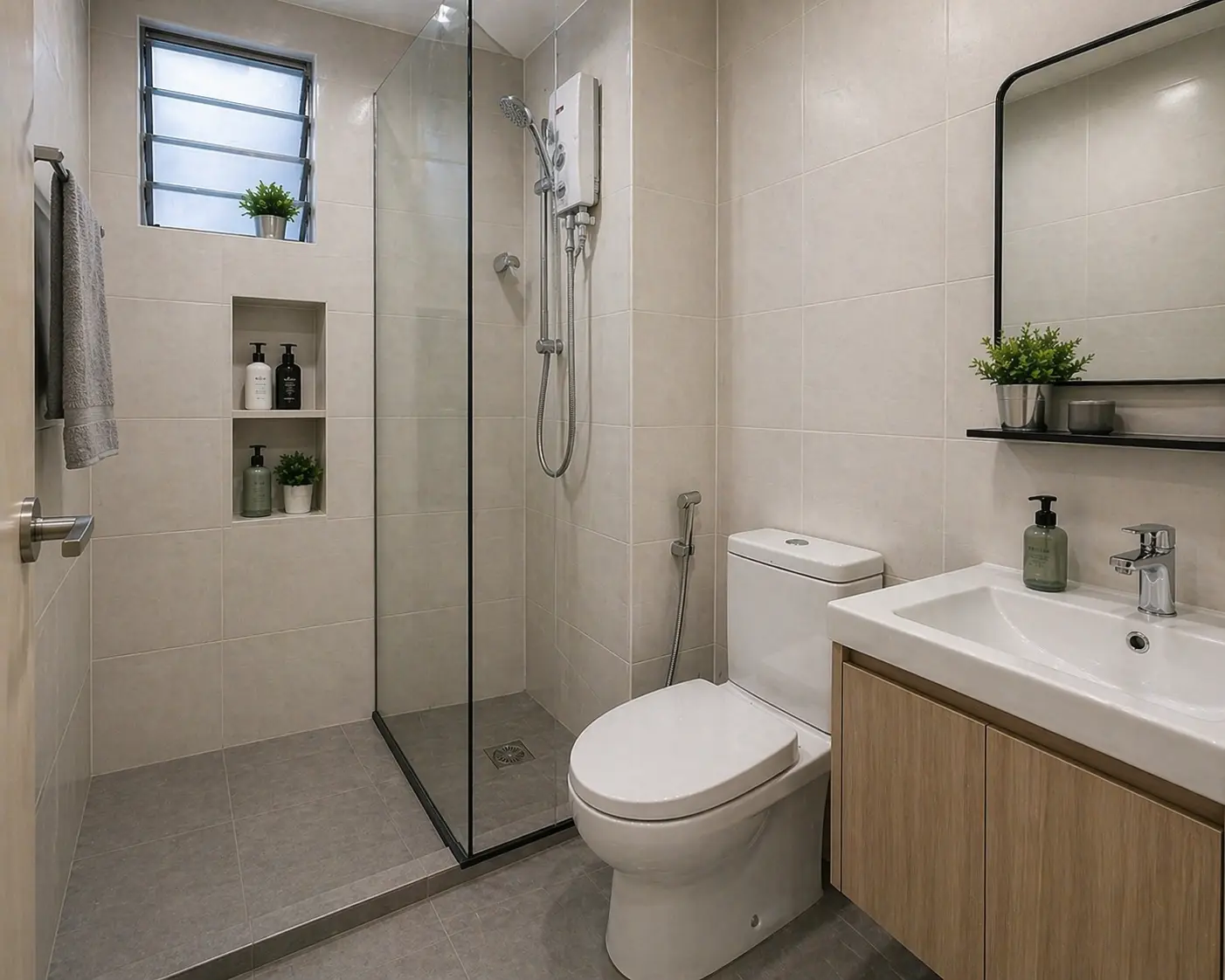
Bathroom Renovation Process Malaysia: Step-by-Step Guide Before You Start
The bathroom renovation process in Malaysia usually follows 8 steps: planning, hacking, plumbing checks, waterproofing, curing, screeding, tiling, fittings, and final testing. Following the right sequence helps prevent leaks, water pooling, failed waterproofing, project delays, and costly rework after handover.
What the Bathroom Renovation Process Looks Like in Malaysia
A proper bathroom renovation process in Malaysia starts long before tiles, basins, or shower fittings are chosen. The first decisions should cover layout, plumbing points, waterproofing scope, floor slope, ventilation, sanitary fittings, and whether the project is a simple toilet renovation or a full bathroom rebuild.
Most homeowners should confirm budget range before hacking starts because waterproofing, pipe correction, tile choice, and sanitary fittings can change the final scope.
Most problems happen when homeowners focus on finishes first. Tiles, basins, shower screens, and fittings matter, but they should only come after the hidden work is planned properly. Hacking, pipe checks, waterproofing, curing time, and slope testing determine whether the bathroom stays dry after renovation.
For cost planning, compare this guide with Bathroom Renovation Cost Malaysia. If your current bathroom has leaks, damp patches, or ceiling stains below, read Bathroom Waterproofing Malaysia before finalising finishes.
What Should Be Decided Before Hacking Starts?
Before hacking begins, homeowners should decide which bathroom items will stay, move, or be replaced. These decisions affect plumbing work, waterproofing scope, tile quantity, sanitary fitting positions, project timeline, and whether the renovation can stay within the original budget range.
Toilet and basin positions
Decide whether the toilet bowl, basin, vanity, and shower mixer will stay in the same positions. Moving them can affect pipe routing, hacking scope, and cost.
Floor trap and drainage
Confirm whether the floor trap position can remain. Changing drainage points may require more hacking and can affect the final floor slope.
Tile size and layout
Tile size affects cutting, slope, wastage, and installation time. Larger tiles may look cleaner but can be harder to slope properly in small toilets.
Shower screen and storage
Confirm shower screen size, niche placement, mirror cabinet, and storage needs early so waterproofing, wall works, and fitting locations can be planned correctly.
Step-by-Step Bathroom Renovation Process
The exact toilet renovation process in Malaysia depends on bathroom size, property type, and existing condition, but most projects follow the same sequence. The important rule is simple: hidden works must be completed and tested before visible finishes go in.
Follow the renovation process in this order. The biggest bathroom problems usually happen when waterproofing, curing, slope testing, or final inspection stages are rushed.
Planning and site protection
Confirm the bathroom layout, sanitary fitting positions, tile direction, hacking scope, access route, and protection for nearby floors, doors, and walkways.
Hacking and removal
Old tiles, screed, fittings, and damaged layers are removed so hidden pipe issues, waterproofing failures, drainage problems, and slab conditions can be properly assessed.
Plumbing, drainage, and floor trap checks
Floor traps, water inlets, waste pipes, toilet outlet position, and shower points are checked or adjusted before waterproofing starts.
Waterproofing and curing
Waterproofing is applied to the floor, corners, wall upturns, and wet zones. It must cure properly before screeding or tiling continues. Many contractors also perform a flood test or water retention test before the next stage proceeds.
Screeding and slope testing
The floor is screeded with a proper fall toward the floor trap. Water should flow to the drain without pooling around corners or the shower area.
Tiling and grouting
Wall and floor tiles are installed after the substrate is ready. Grouting and tile alignment should be checked before fittings are installed.
Sanitary fitting installation
Toilet bowl, basin, taps, shower mixer, accessories, mirror, vanity, shower screen, silicone sealing, and final fixture adjustments are completed after tiling.
Final testing, inspection, and handover
Final checks should include water flow, floor slope, visible leaks, silicone joints, fitting stability, drainage, and general cleaning before handover.
Typical Timeline for Each Bathroom Renovation Stage
A standard bathroom or toilet renovation process in Malaysia usually takes around 8–14 days, depending on bathroom size, waterproofing requirements, tile selection, and site conditions. Larger bathrooms, concealed pipe issues, management restrictions, or extra waterproofing layers can extend the timeline.
Planning + protection
Usually 1 day, depending on site access, protection needs, and material confirmation.
Hacking + removal
Usually 1–2 days depending on bathroom size, tile thickness, and disposal arrangements.
Waterproofing + curing
Usually 2–3 days because the waterproofing layer needs proper curing time before the next stage.
Screeding + slope
Usually 1–2 days, depending on floor levelling, slope correction, and curing condition.
Tiling + grouting
Usually 2–4 days depending on tile size, wall height, pattern, and workmanship requirements.
Fittings + testing
Usually 1–2 days for sanitary fittings, accessories, silicone, water testing, and final checks.
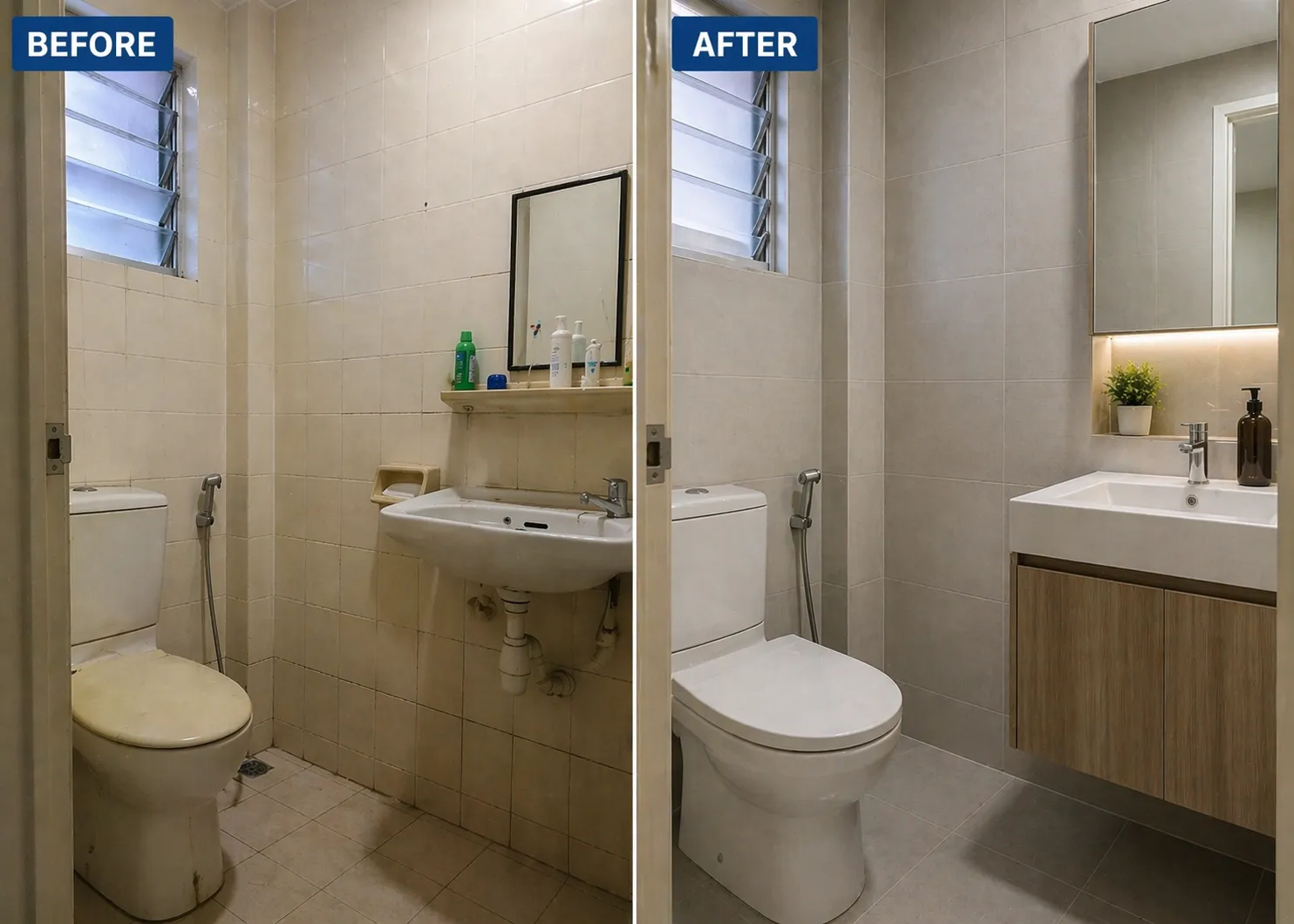
What Following the Sequence Properly Looks Like
A clean finish like this is what the waterproofing, screeding, and tiling stages above are working toward — not just a new coat of tiles over old problems.
Common Mistakes During Bathroom Renovation
Most bathroom renovation problems in Malaysia come from rushing hidden work. The bathroom may look finished, but leaks, ponding water, loose tiles, and damp patches often appear later when the process was not followed properly.
Rushing waterproofing
Waterproofing needs proper coverage and curing. Rushing this step can cause leaks even when the tiles look new.
Ignoring floor slope
New tiles will not solve water pooling if the floor slope is wrong. Slope should be checked before tiling.
Skipping pipe checks
Hidden pipe issues can create leaks after renovation, especially in older condos, apartments, and terrace houses.
Why Waterproofing Should Happen Before Finishes
Waterproofing should be treated as one of the most important stages of the entire bathroom renovation process, not as an optional add-on. Tiles and grout help finish the surface, but they do not replace a proper waterproofing layer underneath.
Prevents repeat leakage
A proper waterproofing layer helps prevent water from reaching the slab, ceiling below, or nearby wall areas after renovation.
Needs curing time
Waterproofing must cure before screeding or tiling continues. Skipping curing time can weaken the layer before it performs properly.
Must be checked before covering
Once tiles are installed, failed waterproofing becomes expensive to fix because the finished surface may need to be hacked again.
How to Prepare Before Starting Renovation
Before starting a bathroom or toilet renovation process in Malaysia, prepare the information that helps the contractor quote and plan correctly. This reduces vague pricing and avoids changing key decisions after hacking starts.
Photos and measurements
Prepare bathroom photos, approximate size, ceiling stains, leak symptoms, and whether the unit is landed, condo, or apartment.
Fitting choices
Decide early on WC, basin, shower mixer, vanity, mirror, storage, and shower screen preferences because these affect layout and plumbing.
Building rules
For condos and apartments, check management rules for hacking hours, debris removal, lift protection, contractor registration, and renovation deposits.
Budget range
Set a realistic budget that includes hacking, waterproofing, tiling, fittings, plumbing correction, slope work, and possible hidden repairs.
Why Following the Right Process Reduces Cost and Delays
A good bathroom renovation process reduces uncertainty. When each stage follows the right order, the project is easier to quote, easier to inspect, and less likely to require rework after tiles and fittings have already been installed.
Fewer hidden mistakes
Pipe, slope, and waterproofing issues are easier to fix before tiling. Waiting until after handover usually costs more.
More realistic timeline
Knowing when hacking, curing, tiling, and fittings happen makes it easier to plan temporary bathroom use during renovation.
Better budget control
A process-first plan reduces guesswork and helps separate necessary repair work from optional finish upgrades.
Bathroom Renovation Process Malaysia FAQs
What are the main bathroom renovation steps in Malaysia?
The main bathroom renovation steps are planning, site protection, hacking, plumbing checks, waterproofing, curing, screeding, slope testing, tiling, sanitary fitting installation, final water testing, and handover. The exact sequence may vary slightly depending on property type and bathroom condition.
How long does the bathroom renovation process in Malaysia take?
A standard bathroom or toilet renovation process in Malaysia usually takes around 8–14 days. Timelines can increase when there are hidden pipe issues, extra waterproofing layers, management approval requirements, or complex tile work.
When does waterproofing happen during renovation?
Waterproofing usually happens after hacking and plumbing checks, but before screeding, tiling, and sanitary fitting installation. It must cure properly before the next stage continues, otherwise the bathroom may be more likely to leak later.
Why is waterproofing tested before tiling?
Testing helps confirm the waterproofing layer is performing properly before it is covered by screed and tiles. Finding a problem at this stage is usually far easier and less costly than discovering a leak after renovation is complete.
Do all toilet renovation projects need hacking?
Most full toilet renovation projects need hacking because old tiles, screed, and failed waterproofing must be removed before new waterproofing can be applied properly. Minor cosmetic work may avoid hacking, but it will not solve hidden leakage or slope problems.
Why is floor slope testing important?
Floor slope testing checks whether water flows properly toward the floor trap. Without proper slope, water may pool around corners or the shower area, increasing the risk of dampness, stains, and long-term seepage issues.
What should I prepare before bathroom renovation starts?
Prepare bathroom photos, rough measurements, leak symptoms, budget range, property type, management rules if applicable, and preferred sanitary fittings. These details help narrow the scope before hacking, waterproofing, tiling, and plumbing decisions are made.
What is the biggest mistake in the toilet renovation process Malaysia?
The biggest mistake is focusing on tiles and fittings before checking waterproofing, pipe condition, and floor slope. A bathroom can look new but still leak if the hidden work was rushed, skipped, or done in the wrong order.
Plan the Renovation Process Before Spending on Finishes
Send your bathroom photos, property type, leakage concerns, rough measurements, and budget range. We'll help identify which bathroom renovation steps matter most before hacking, waterproofing, tiling, fittings, and final testing begin.