
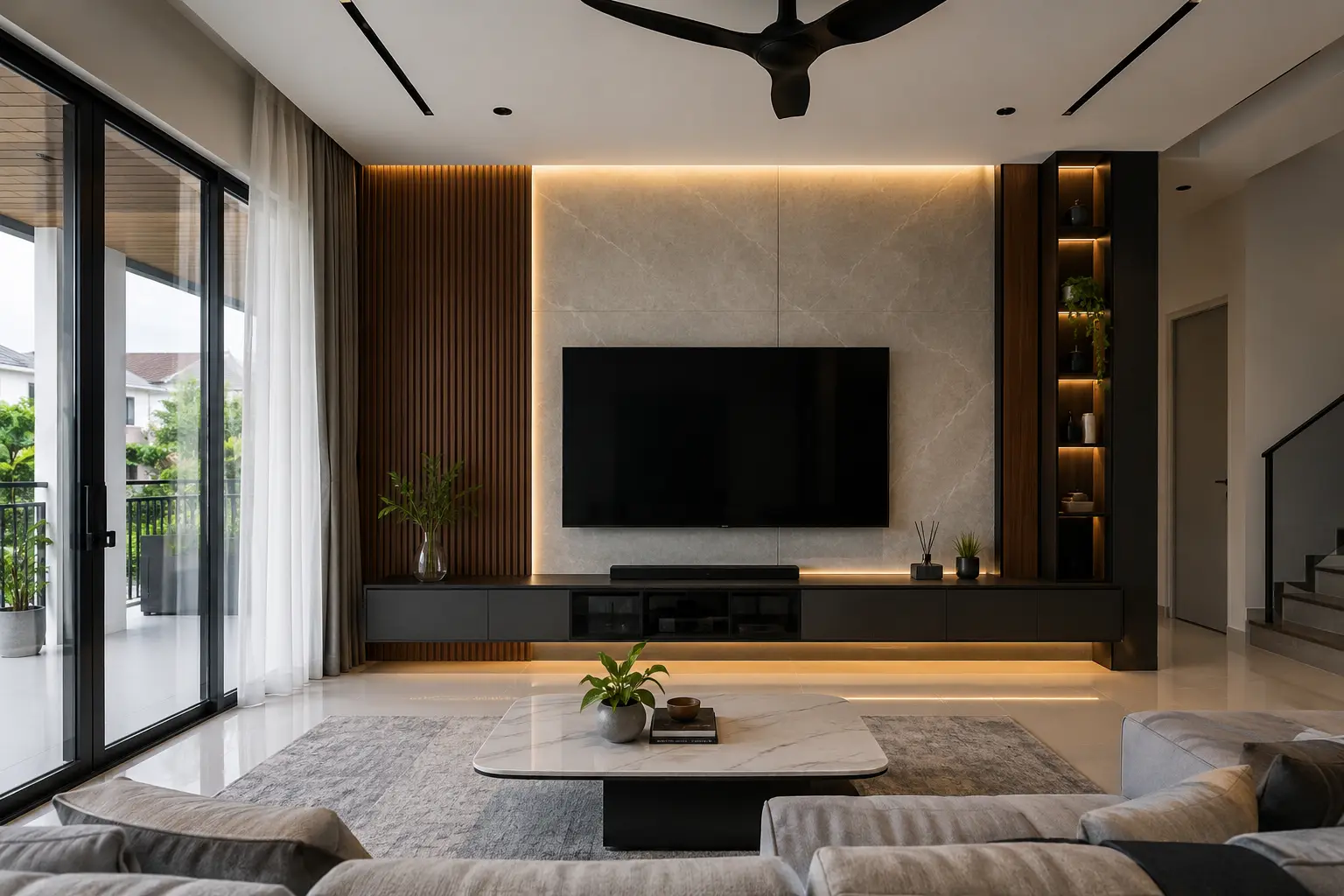
Feature Wall Design in Malaysia: Materials, Lighting and Cost
A feature wall is usually the first thing anyone notices walking into a room - and one of the most requested upgrades in Malaysian living room and bedroom renovations, whether it's a textured TV console wall, a wood-panelled headboard, or a bold accent behind the dining table. My Reno Service designs and builds feature walls for homes, apartments and condos across KL, Selangor and the wider Klang Valley.
A small bedroom and a large open-plan living room rarely suit the same treatment. Natural light, the furniture already in the room, and how bold or subtle you want the result all shape what actually works.
Send us a photo of the wall and room you're working with, along with any styles you like, and we'll help you find a material and layout that actually fits the space before committing to a design.
What Is a Feature Wall?
A feature wall - also called an accent wall - is a single wall in a room finished differently from the others, using texture, colour, material or lighting to draw the eye and give the space a focal point. It's most commonly built behind a TV console in the living room, but bedrooms, dining areas and entrance hallways are just as common.
Feature walls range from a simple painted colour block to a fully panelled wall with integrated lighting, wiring for wall-mounted appliances, and custom carpentry. The material chosen, and how much the wall needs to work around - an existing TV bracket, an air-conditioner, a door frame - shapes both the scope and the cost.
One reason feature walls are so popular is that they can completely change how a room feels without becoming a major renovation. There's no plumbing to move, no walls to knock down, and no layout to rethink. That's why so many homeowners choose one as a standalone upgrade, separate from a full room renovation.
Which Feature Wall Suits Your Room?
If you already have a rough idea of the look you want, here's roughly where to start before reading the full breakdown below.
Want a warm, natural look
Wood slat or fluted panelling is the most requested option in Malaysia right now, especially for TV consoles and bedroom headboards, and pairs well with warm cove lighting.
Want something bold and premium
Stone or ledger cladding gives a heavier, more architectural feel, and works well as a living room or dining focal point in larger homes.
Working with a tight budget
A painted colour block or wallpaper feature wall gives a real visual change for a fraction of the cost of panelling or cladding.
Want a modern, minimal finish
Microcement or Venetian plaster gives a seamless, textured surface with no visible joints, suited to a more contemporary look.
Benefits of Adding a Feature Wall
A feature wall is a relatively contained project, but it changes how a room feels more than most single-item upgrades.
Gives a room a clear focal point
A plain room with matching walls on every side can feel flat. A single standout wall gives the eye somewhere to land and makes the rest of the furniture layout feel intentional.
Hides wiring and wall-mounted brackets
TV consoles, wall-mounted air-conditioners and speaker brackets are easier to conceal cleanly within a panelled or clad feature wall than left exposed on a plain painted wall.
Adds texture without a full renovation
Material and lighting can transform how a room feels without touching layout, plumbing or structural work, which keeps scope and disruption contained.
Works with lighting for evening ambience
Cove lighting, LED strips or wall washers integrated into a feature wall change how the whole room feels after dark, not just the one wall.
Improves how a room photographs and shows
For homeowners planning to sell or rent out a unit, a well-designed feature wall usually stands out in listing photos more than most other single-item upgrades.
Can be scaled to budget
From a simple paint treatment to full stone cladding, feature walls scale from a few hundred ringgit to a significant carpentry project, so it's rarely an all-or-nothing decision.
Feature Wall Materials We Work With
Feature wall material choice affects cost, install time and how the finished wall is maintained. Most projects fall into one of these categories.
So, what does it actually cost? A painted accent wall usually starts from around RM8 per sq ft, wallpaper from about RM12, and panelling, cladding or microcement anywhere from RM35 to RM120 per sq ft depending on the material and finish. A typical condo TV console wall lands somewhere between RM2,000 and RM6,000 all in, once lighting is included.
| Material | Best for | Relative cost | Note |
|---|---|---|---|
| Paint / colour block | Budget upgrades, rental units | Budget (RM8–RM18 / sq ft) | Fastest and easiest to change again later |
| Wallpaper | Bedrooms, pattern and texture variety | Budget–Mid (RM12–RM28 / sq ft) | Surface prep matters; less durable in humid areas |
| Wood slat / fluted panel | TV consoles, headboards, entrances | Mid-range (RM35–RM70 / sq ft) | A common pick for TV consoles and headboards |
| 3D textured panel | Modern living rooms that need depth | Mid-range (RM40–RM80 / sq ft) | Lightweight, installs over existing plaster |
| Microcement / Venetian plaster | Seamless, minimalist finishes | Mid–Premium (RM45–RM90 / sq ft) | Needs a skilled applicator; labour-heavy pricing |
| Mirror panel | Small rooms, glam-style dining or living areas | Mid–Premium (RM50–RM100 / sq ft) | Needs proper safety backing and mounting |
| Stone / ledger cladding | Premium living rooms, dining focal points | Premium (RM60–RM120 / sq ft) | Heaviest option on this list |
Paint / Colour Block
Budget (RM8–RM18 / sq ft). Best for budget upgrades and rental units - fastest and easiest to change again later.
Wallpaper
Budget–Mid (RM12–RM28 / sq ft). Best for bedrooms and pattern variety - surface prep matters, and it's less durable in humid areas.
Wood Slat / Fluted Panel
Mid-range (RM35–RM70 / sq ft). Best for TV consoles, headboards and entrances.
3D Textured Panel
Mid-range (RM40–RM80 / sq ft). Best for modern living rooms that need depth - lightweight, installs over existing plaster.
Microcement / Venetian Plaster
Mid–Premium (RM45–RM90 / sq ft). Best for seamless, minimalist finishes - needs a skilled applicator, so pricing is labour-heavy.
Mirror Panel
Mid–Premium (RM50–RM100 / sq ft). Best for small rooms or glam-style dining and living areas - needs proper safety backing and mounting.
Stone / Ledger Cladding
Premium (RM60–RM120 / sq ft). Best for premium living rooms and dining focal points - the heaviest option on this list.
Indicative KL & Selangor pricing, reviewed 2026. These figures cover material and installation for standard access conditions. They exclude lighting and electrical work, wall preparation for damaged surfaces, and any furniture or TV console carpentry - final pricing depends on site condition and is confirmed during a site visit.
Feature Wall Materials Explained
What each one actually involves, and who it tends to suit.
Wood Slat / Fluted Panel
Best for: TV consoles, bedroom headboards and entrance walls suited to a warm, natural look.
Timber or MDF slats are spaced evenly across a batten frame fixed to the wall. A strip of warm LED lighting is often run behind or between them, giving a soft glow along the wall instead of a harsh, cool light.
Slat panelling is also useful for concealing an existing TV bracket, air-conditioner pipework or switches, since the frame behind it creates a natural cavity. Real timber and PVC or engineered slat options both exist, trading off cost, weight and maintenance.
3D Textured Panel
Best for: modern living rooms after visual depth without heavy material cost.
PU or gypsum panels with a raised geometric or organic texture are fixed directly over the existing wall surface. They're lightweight compared to stone or masonry alternatives, which keeps installation faster and less disruptive.
Panels are usually painted after installation to match or contrast with the rest of the room. The raised texture also catches light differently through the day - one more reason homeowners pick it over a flat painted wall.
Stone / Ledger Cladding
Best for: premium living rooms and dining areas, ideal for a heavier, more architectural focal point.
Natural stone veneer or engineered stone panels are fixed to the wall in a stacked or ledger pattern, adding real texture and visual weight that printed or panelled materials can't quite replicate.
It's the heaviest option on this list. We always check the existing wall's condition and fixing method during the site visit before recommending it, since it matters far more here than with lighter materials.
Microcement / Venetian Plaster
Best for: minimalist rooms - a good choice if you want a seamless, textured surface with no visible joints.
Microcement is applied straight onto the wall in several thin layers, then finished matte, polished or lightly textured depending on the look you want. Unlike most other materials on this list, there are no panel joints or seams to see.
The material itself isn't especially expensive - the cost mostly comes from labour, since a skilled applicator is needed to get an even, blemish-free finish across a full wall.
Wallpaper
Best for: bedrooms and rooms popular for pattern or texture variety on a tighter budget.
Wallpaper offers by far the widest range of colours, patterns and textures of any material here, and installation is quick once the wall surface is properly prepared and smoothed.
It's less durable than paint or panelling in humid or high-traffic areas, and any unevenness in the wall underneath usually shows through, so surface preparation matters more than it does for heavier materials.
Paint / Colour Block
Best for: the simplest, most affordable feature wall upgrade, or rental units.
A contrasting or complementary colour is applied to a single wall, sometimes with a geometric shape or block pattern masked out with tape for a more considered look than a flat single colour.
It's the easiest option to change again later if the room's furniture or colour scheme changes, and pairs well with existing furniture without needing to be planned as far in advance as panelling or cladding.
Mirror Panel
Best for: small rooms looking to feel larger, or glam-style dining and living areas.
Full mirror panels or mirrored tiles reflect both natural and artificial light around the room, which can make a small living room, dining area or hallway feel noticeably more open.
Proper safety backing and mounting matter more here than with other materials, since the panels are heavy and need to be securely fixed - this isn't a wall treatment to have installed without the right hardware.
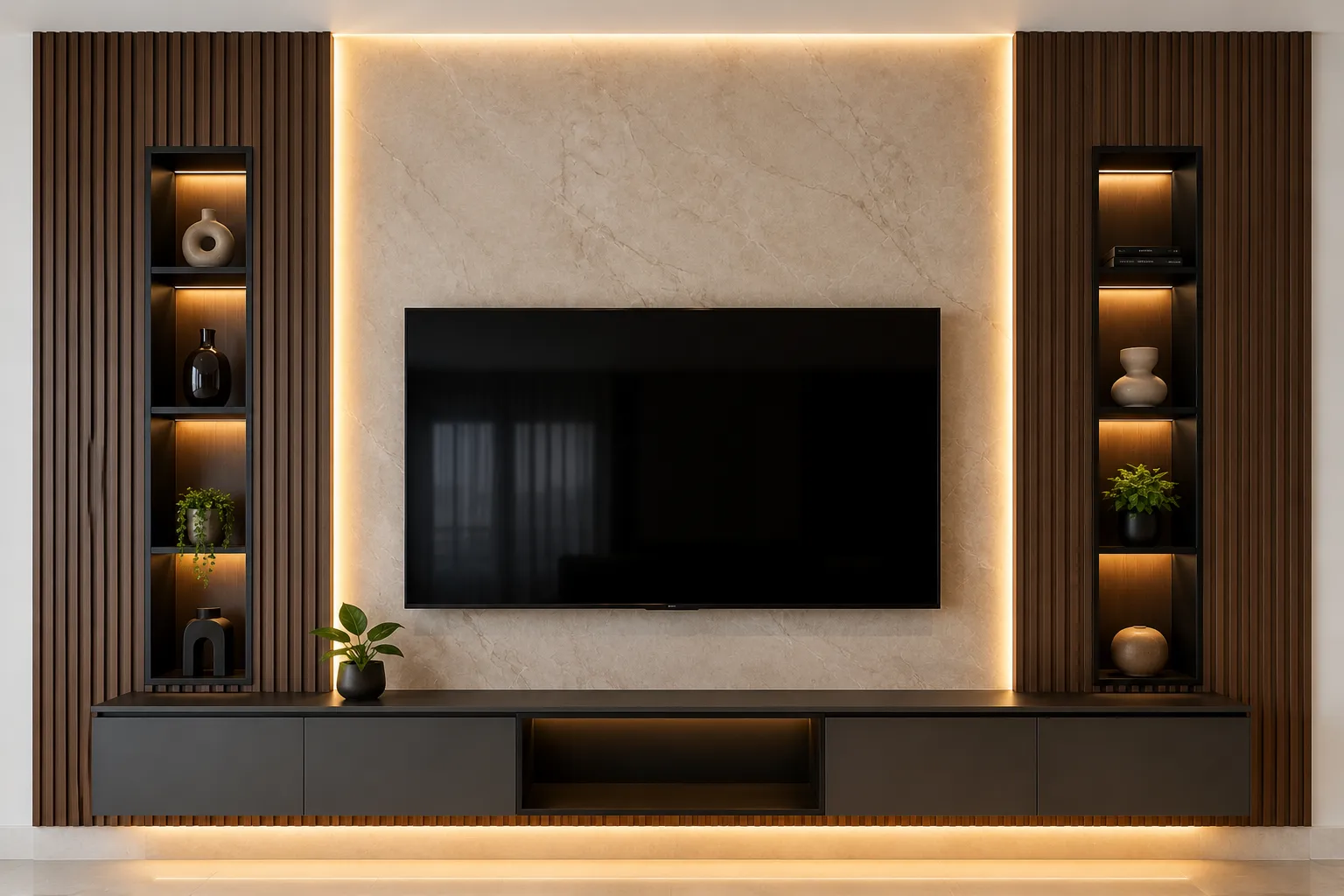
Backlit shelving turns a flat panel into a focal point
The panel material does most of the visual work during the day, but it's the warm strip lighting tucked behind the open shelving that changes how the whole wall looks once the sun goes down.
Feature Walls by Room
Which room it's going in has a big influence on the right material and scale.
Living room TV consoles
The most common feature wall request in Malaysia - usually built around an existing or planned TV bracket, with cable management and lighting worked into the design from the start.
Bedroom headboard walls
A panelled or wallpapered wall behind the bed gives a hotel-style focal point, and works well in both landed homes and condo bedrooms regardless of size.
Dining and entrance walls
A bolder material like stone cladding or a mirror panel often works well in a dining area or entrance hallway - these are spaces people pass through, not sit facing for hours at a time.
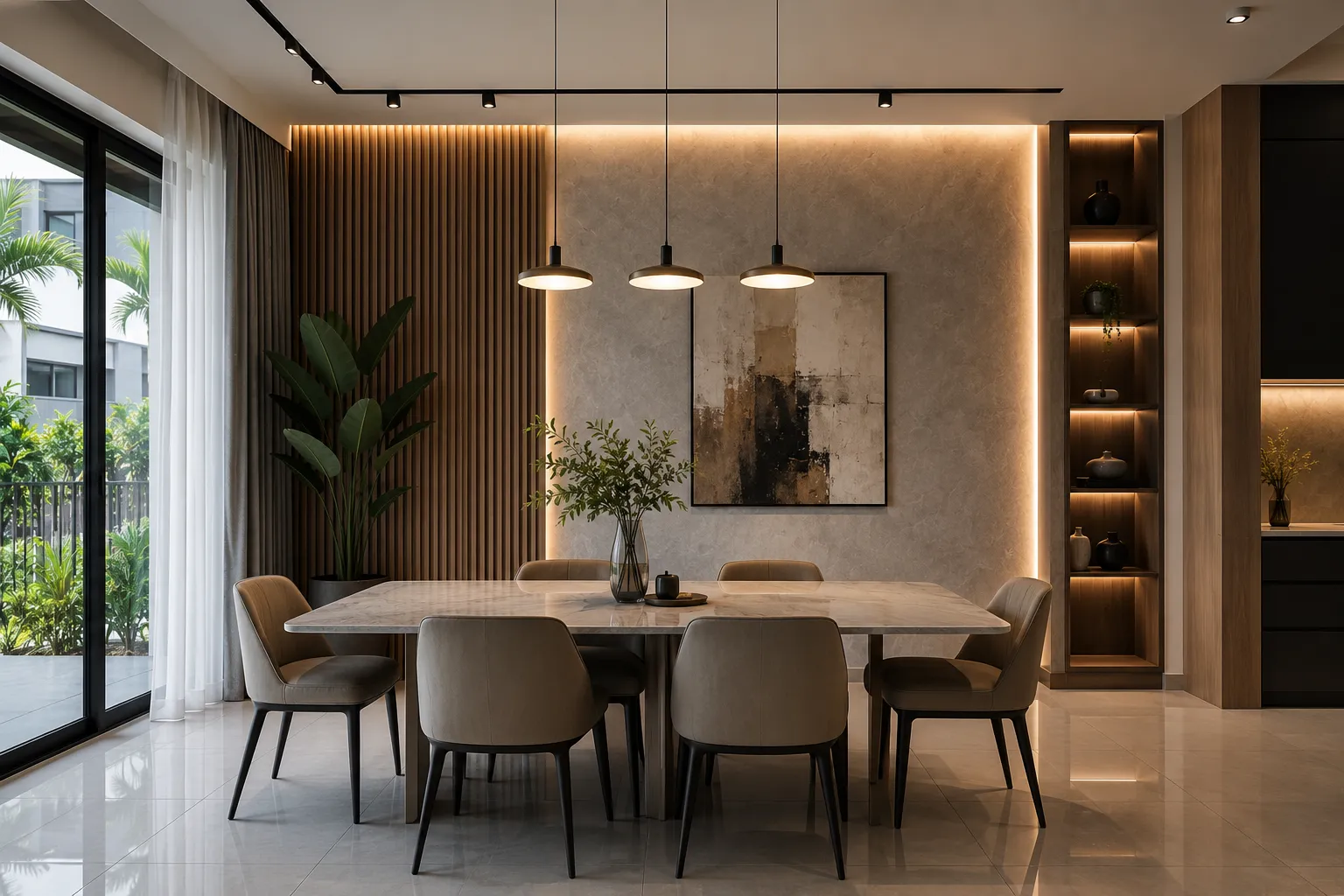
Dining walls can carry a feature just as well
Mixing two materials - a fluted panel section next to a textured stone-look panel - gives a dining wall enough presence to anchor the space, especially with a piece of artwork and pendant lighting doing the rest of the work above the table.
Factors That Affect Feature Wall Cost
Beyond the material you choose, several other factors shape the final price.
Wall size
Larger walls need more material and labour, though very small feature walls can sometimes cost more per square foot due to fixed setup and cutting costs.
Material choice
Paint and wallpaper sit at the affordable end; wood panelling, 3D panels, microcement and stone cladding cost progressively more for material and installation.
Lighting integration
Cove lighting or LED strips built into the wall add wiring, transformers and installation time beyond the base material cost.
Existing wall condition
Uneven, cracked or damaged walls often need patching or skim-coating before some materials, particularly wallpaper and microcement, can be applied properly.
Electrical and AV points
Relocating a TV point, adding extra sockets, or routing cables through a panelled wall adds coordination with electrical work.
Design complexity
A simple flat colour block costs far less than a wall with curves, mitred joints, mixed materials or a custom pattern that needs more planning and cutting.
Because so many of these factors depend on the actual room, we generally can't give an accurate number without seeing it first. A site visit lets us check the wall condition, existing wiring and access properly, which is usually the difference between a rough estimate and a quotation you can actually plan around.
Feature Walls in Condos, Apartments and Landed Homes
Where the property sits changes what needs planning before installation day, not just what the wall ends up looking like.
Condos and serviced apartments across KL and Selangor usually come with a management corporation or JMB overseeing renovation work, and panelling, cladding or mirror installation can fall under the same rules as any other trade. Every management office sets its own conditions, so it makes sense to check whether your building requires a renovation deposit, a permit, or sign-off before work starts. Permitted working hours are also common - often weekdays and Saturday mornings only, with noisier cutting or drilling restricted to certain windows.
Heavier materials add another layer of planning in high-rises. Stone or ledger cladding and full mirror panels are bulky and need to travel up by lift. Lift protection, service lift booking and loading bay access are best arranged several days ahead - leaving it to the day itself often causes delays. Terrace houses, semi-detached homes and bungalows tend to have fewer of these access restrictions, though parking for a delivery van or material lorry can still need sorting out on narrower terrace streets.
Malaysia's humidity also plays a role in which material holds up best. Wallpaper adhesive can lift over time in poorly ventilated rooms or walls near kitchens and bathrooms, MDF slats can swell slightly if the wall behind them stays damp, and timber finishes usually need a light re-coat every few years to stay looking sharp. Paint, PU-based 3D panels and microcement tend to be more forgiving in humid corners of the home.
Building approval and working hours
Check with your JMB or management corporation on renovation deposits, permits and permitted working hours before confirming an install date.
Lift access and material delivery
Stone cladding and mirror panels are heavy - it's best to arrange service lift booking, lift protection and loading bay access several days ahead of installation day.
Humidity and long-term maintenance
Wallpaper and timber need a bit more upkeep in humid corners of the home; paint, PU panels and microcement tend to hold up with less maintenance.
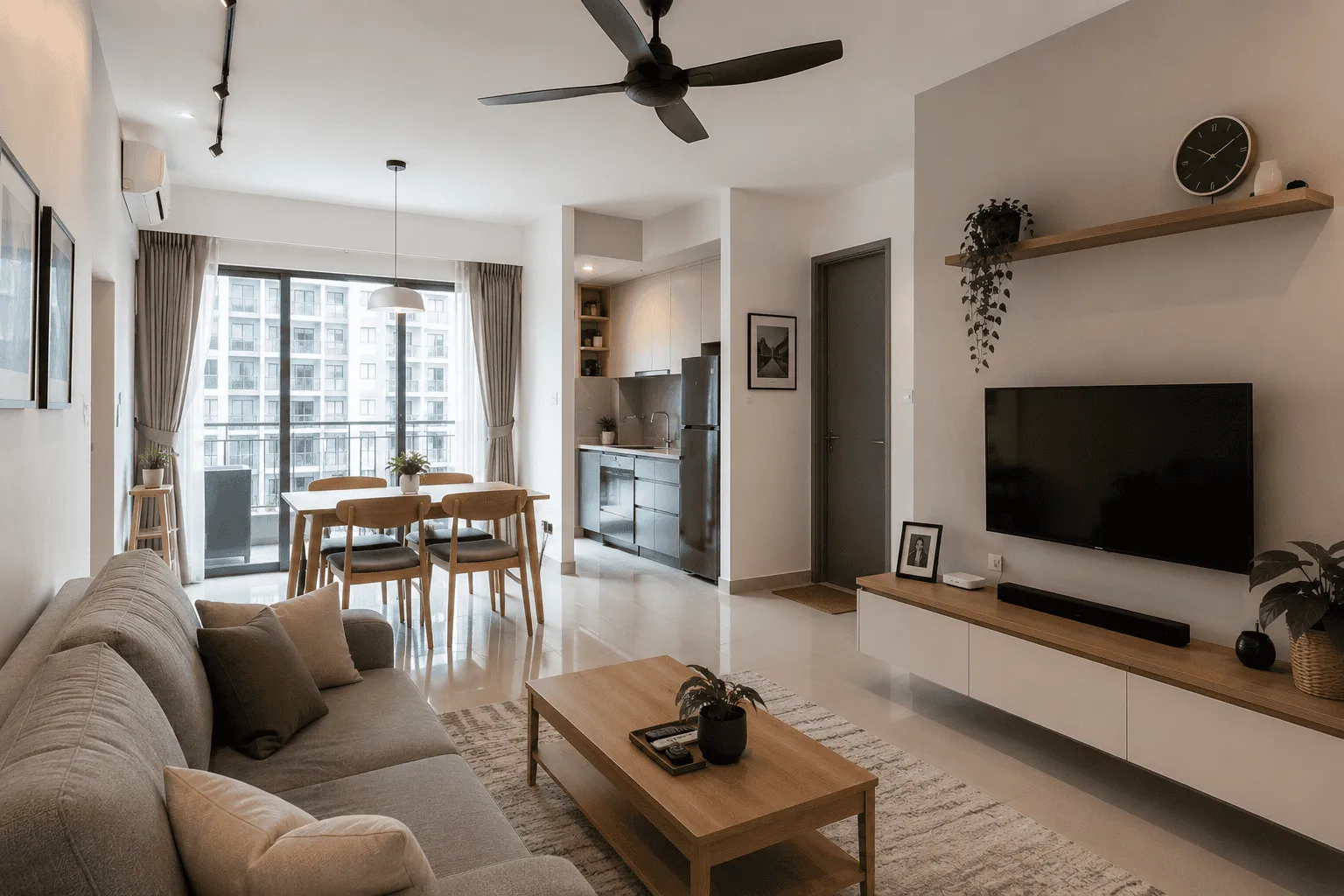
A contrasting paint block, done properly, still reads as intentional
Not every feature wall needs panelling or cladding to work - a well-chosen contrasting colour, cleanly cut in against the ceiling and skirting line, can carry a TV wall on its own, especially paired with a simple floating shelf instead of a full console.
Our Feature Wall Process
From the first site visit to final walkthrough, this is roughly how a project unfolds.
Consultation and site visit
Share photos of the room and any styles you like. We visit to check the wall condition, existing TV or furniture position, and lighting.
Design and material selection
We narrow down material, layout and lighting options that suit the room size, budget and existing furniture.
Measurement and mock-up
Precise measurements are taken and, for panelled or patterned designs, a layout is mocked up before ordering material. It's surprisingly common for the existing TV point to sit a little off-centre from where the console will actually go - we catch that here, before any panels are cut.
Quotation
A detailed quotation is prepared covering material, carpentry, lighting and any wall preparation identified during the site visit.
Installation
The wall is prepared, then material, lighting and any wiring are installed in sequence.
Final walkthrough
We review the finished wall with you, checking alignment, finish quality and lighting before considering the job complete.
What to Prepare Before a Feature Wall Site Visit
Having a few things ready before we visit makes the assessment faster and the quotation more accurate.
Photos of the wall and room
Current photos, including any existing TV, furniture or air-conditioner position, help us assess the wall and plan around what's already there.
Style references
Photos of feature walls you like - even from unrelated rooms - help us understand the direction you're leaning toward before we suggest materials.
TV or furniture dimensions
If the feature wall is going behind a TV console or bed, knowing the size helps us plan proportions and cable positions correctly.
Rough budget and timeline
Knowing whether you want a simple refresh or a full panelled design with lighting helps us recommend the right material from the start.
Common Feature Wall Mistakes to Avoid
A feature wall is a relatively small project, but a few recurring mistakes cause most of the regret afterward.
Skipping wall preparation
Uneven or damaged plaster shows through wallpaper and lighter materials, and can affect how flush panelling sits against the wall.
Planning lighting after the wall is built
Adding cove lighting or LED strips after panelling is installed usually means partially dismantling it. Once the panelling is up, moving a light position gets a lot harder - it's one of the first things we plan.
Choosing a material too heavy for the room
A large stone-clad or dark-toned wall in a small room can make the space feel smaller instead of more considered. Proportions matter just as much as the material itself.
Ignoring existing wiring and brackets
Not accounting for an existing TV bracket, AC unit or switches before finalising the design can mean awkward cutouts or a redesign partway through.
Choosing trend-led materials without checking durability
Some heavily textured or patterned finishes date faster than simpler materials, or don't hold up well in humid or high-traffic areas. It's a good idea to weigh that against how long you plan to keep the look.
Three Typical Feature Wall Scenarios
The TV console makeover
A living room with a bare painted wall and wall-mounted TV gets a wood slat panel wall with concealed cabling and warm cove lighting, turning the console into the room's focal point. A condo-sized wall of around 10ft by 8ft typically takes 3-4 days and lands in the RM3,500-RM6,000 range including lighting.
The bedroom headboard wall
A plain bedroom gets a wallpapered feature wall behind the bed, giving the room a hotel-style focal point without touching the rest of the layout. A single headboard wall usually takes a day to install and costs somewhere between RM800 and RM2,000 depending on the pattern chosen.
The dining room stone accent
A dining area with a plain wall behind the table gets a ledger stone cladding feature wall, adding texture and a sense of occasion to a space used mostly for entertaining. A wall this size usually needs about a week once the existing surface is checked and prepared, with material and installation landing between RM5,000 and RM10,000.
Why Homeowners in Kuala Lumpur & Selangor Work With Us for Feature Walls
A feature wall is a visible, judged-daily part of the room, which is why we treat material choice and lighting planning as seriously as any larger renovation item.
Materials matched to the room, not just the trend
We recommend based on room size, lighting and furniture, not just what's currently popular, so the finished wall holds up over time.
Lighting planned alongside the wall
We coordinate cove lighting and LED wiring with the electrician during design, so the transformer and switch positions are settled before carpentry starts.
Clear scope and detailed quotations
Material, carpentry, lighting and any wall preparation are listed as separate line items in the quotation, so you know exactly what you're paying for before work starts.
Coordinated with the rest of your renovation
When a feature wall is part of a larger renovation, we plan it alongside electrical points, flooring and ceiling work instead of scheduling it as its own job.
For homeowners planning a feature wall as part of a larger project, this pairs naturally with a living room design refresh, a plaster ceiling upgrade, or a full interior design and renovation project - it's usually easier to plan wall, ceiling and lighting work together as one job, not three. See our full list of individual renovation services if you're weighing this against other standalone upgrades.
Feature Wall Malaysia FAQs
What is a feature wall and do I need one?
A feature wall is a single wall finished differently from the rest of the room - through colour, texture, material or lighting - to give the space a clear focal point. It's not essential, but it's one of the more effective ways to make a plain room feel intentional without a full renovation.
What's the difference between a feature wall and an accent wall?
They're the same thing - "feature wall" and "accent wall" are used interchangeably in Malaysia, referring to a single standout wall treated differently from the rest of the room.
How much does a feature wall cost in Malaysia?
As a rough guide, a painted colour block starts from RM8-RM18 per sq ft, wallpaper RM12-RM28 per sq ft, wood slat or 3D panelling RM35-RM80 per sq ft, and premium options like stone cladding or microcement RM45-RM120 per sq ft. Total cost depends heavily on wall size and whether lighting or carpentry is included.
What's the most popular feature wall material in Malaysia right now?
Wood slat or fluted panelling is currently the most requested style, particularly behind TV consoles and as bedroom headboard walls, usually paired with warm cove or strip lighting.
Can a feature wall be built over existing tiles or plaster?
In most cases, yes - panelling, cladding and 3D panels can usually be installed directly over a sound existing surface. Wallpaper and microcement need a smoother, better-prepared surface, so uneven or damaged walls may need patching first.
Does a feature wall need lighting?
It's not required, but integrated lighting - cove lighting, LED strips behind panelling, or wall washers - is one of the details that makes the biggest difference to how a feature wall looks in the evening, and it's much easier to plan before the wall is built than to add afterward.
How long does a feature wall take to install?
A paint or wallpaper feature wall can be done in a day or two. Wood panelling or 3D panels typically take 3-5 days depending on wall size and lighting integration. Stone cladding or microcement, which need more surface preparation and curing time, usually take a week or more.
Is wallpaper or paint better for a feature wall?
It depends on the look and the room. Paint is more durable and easier to touch up, while wallpaper offers far more pattern and texture variety but can be more sensitive to humidity and less forgiving of wall imperfections. Bedrooms tend to suit wallpaper well; high-humidity or high-traffic areas usually suit paint better.
Can a feature wall hide wiring and air-conditioner brackets?
Yes, this is one of the more practical reasons homeowners choose panelling or cladding over paint - a raised or framed feature wall can conceal cabling, brackets and conduit that would otherwise sit exposed on a flat painted wall.
Do I need an interior designer to plan a feature wall?
Not necessarily for a straightforward paint or wallpaper wall, but for panelling, lighting integration or anything involving custom carpentry, having the design planned properly before installation avoids mismatched proportions or awkward furniture clearances later.
What size room works best for a feature wall?
Most room sizes can work with the right material and scale - a small bedroom might suit a single wallpapered wall, while a larger living room can carry a full panelled or clad wall without feeling overwhelming. The main risk is choosing a heavy, busy material for a small space, which can make the room feel smaller rather than more considered.
Can a feature wall be changed or removed later?
Paint and wallpaper are the easiest to change later. Panelling, cladding and microcement are more permanent and more involved to remove or replace, so it's worth being confident in the material and design before committing to these options.
Ready to plan your feature wall?
Send us a few photos of the wall and room, your property type, and any design references you like. We serve KL, Selangor and the Klang Valley, and we'll help you find a material and layout that fits the space before you commit to a design.