
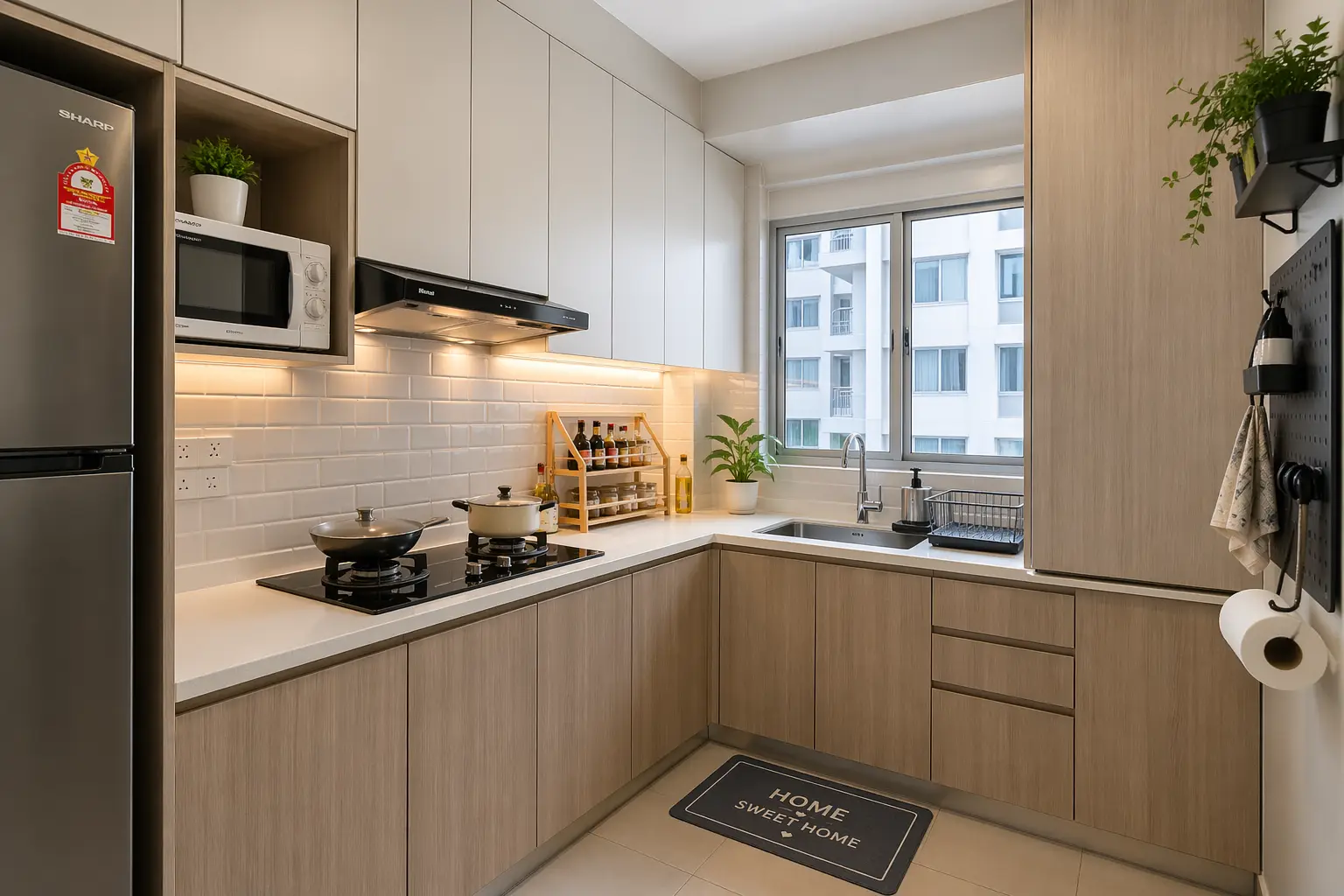
Small Kitchen Renovation Malaysia: Space-Saving Layouts for Compact Homes
A small kitchen does not have to feel cramped or impractical. In many KL and Selangor condos and apartments, a well-planned compact kitchen can be just as practical for everyday use as a larger one when the layout, storage, and appliance selection are planned around the available space. My Reno Service helps homeowners plan small kitchen renovations that prioritise movement, storage, and everyday cooking comfort over squeezing in every possible feature.
This guide covers space-saving layouts, vertical storage ideas, budget bands, and common mistakes homeowners make when renovating a compact kitchen in Malaysia. Whether you’re renovating a condo kitchen or updating an older terrace home, careful planning usually delivers better results than simply adding more cabinets.
Most small kitchen renovations in Malaysia range from RM8k to RM40k+, and usually perform best when layout, storage, and appliance clearance are planned before cabinet colours and finishes are chosen.
What Makes Small Kitchen Renovation Different
A small kitchen renovation is less about fitting in more and more about making every inch work harder. Layout mistakes that barely matter in a larger kitchen can make a compact kitchen feel unusable, so planning tends to focus on movement, storage efficiency, and appliance clearance before finishes are chosen.
Limited footprint
Every cabinet depth, appliance width, and walkway measurement matters more when there is little spare room to absorb planning mistakes.
Storage has to work harder
With less floor area, storage usually needs to go up rather than out, using full-height cabinets and better internal organisation.
Layout constraints
Fixed plumbing points, doorways, and windows often limit how much a small kitchen layout can change without significant hacking work.
Small Kitchen Renovation Cost in Malaysia
Small kitchen renovation costs are usually lower than full-size kitchen renovations because less cabinet length, countertop area, and finishing material are required. However, costs can still increase significantly if the layout changes, plumbing is relocated, or premium materials and storage accessories are selected. Use these ranges as planning guides rather than fixed quotations.
Below RM10k
Suitable for cabinet refacing, countertop replacement, or a simple refresh where the existing layout and plumbing stay unchanged.
RM10k–RM25k
Common for new cabinets, improved storage, and countertop upgrades in compact condo and apartment kitchens.
RM25k–RM40k+
Suitable for compact kitchens that need custom cabinetry, premium countertops, appliance integration, layout adjustments, or advanced storage solutions.
For broader budgeting context, compare this guide with our kitchen renovation cost Malaysia guide.
Labour costs generally remain fairly consistent regardless of kitchen size, so most savings come from shorter cabinet runs, smaller countertops, and fewer finishing materials rather than substantially lower installation costs. Custom storage accessories and premium hardware can still increase the overall budget even in compact kitchens.
One reason compact kitchens can still become expensive is the use of specialised storage hardware. Pull-out pantry systems, corner carousel units, soft-close drawers and custom organisers often cost more per cabinet than standard shelving. Although these accessories increase the budget, they usually provide greater day-to-day value because every centimetre of storage matters in a smaller kitchen.
Space-Saving Kitchen Layouts for Compact Homes
The right layout depends on the room shape, door and window positions, and how the kitchen connects to the rest of the home. A layout that looks attractive in photos is not always the one that delivers the best workflow in a compact kitchen.
Single-wall layout
All cabinets and appliances run along one wall, keeping the rest of the room open. Common in small condos and studio-style apartments.
Galley layout
Cabinets run along two parallel walls, giving more storage and counter space than a single-wall kitchen while still fitting narrow rooms.
L-shaped layout
Uses two adjoining walls to free up floor space for movement or a small dining table, while still separating prep and cooking zones.
Corner-optimised layout
Uses carousel units or corner drawers to make otherwise wasted corner space usable, which matters more in tighter kitchens.
Choosing the right layout depends on room shape, door positions and existing plumbing to find the most practical use of the available space. A household that cooks daily may prioritise countertop space and workflow, while occasional cooking may benefit more from additional storage or a more open connection to the dining area.
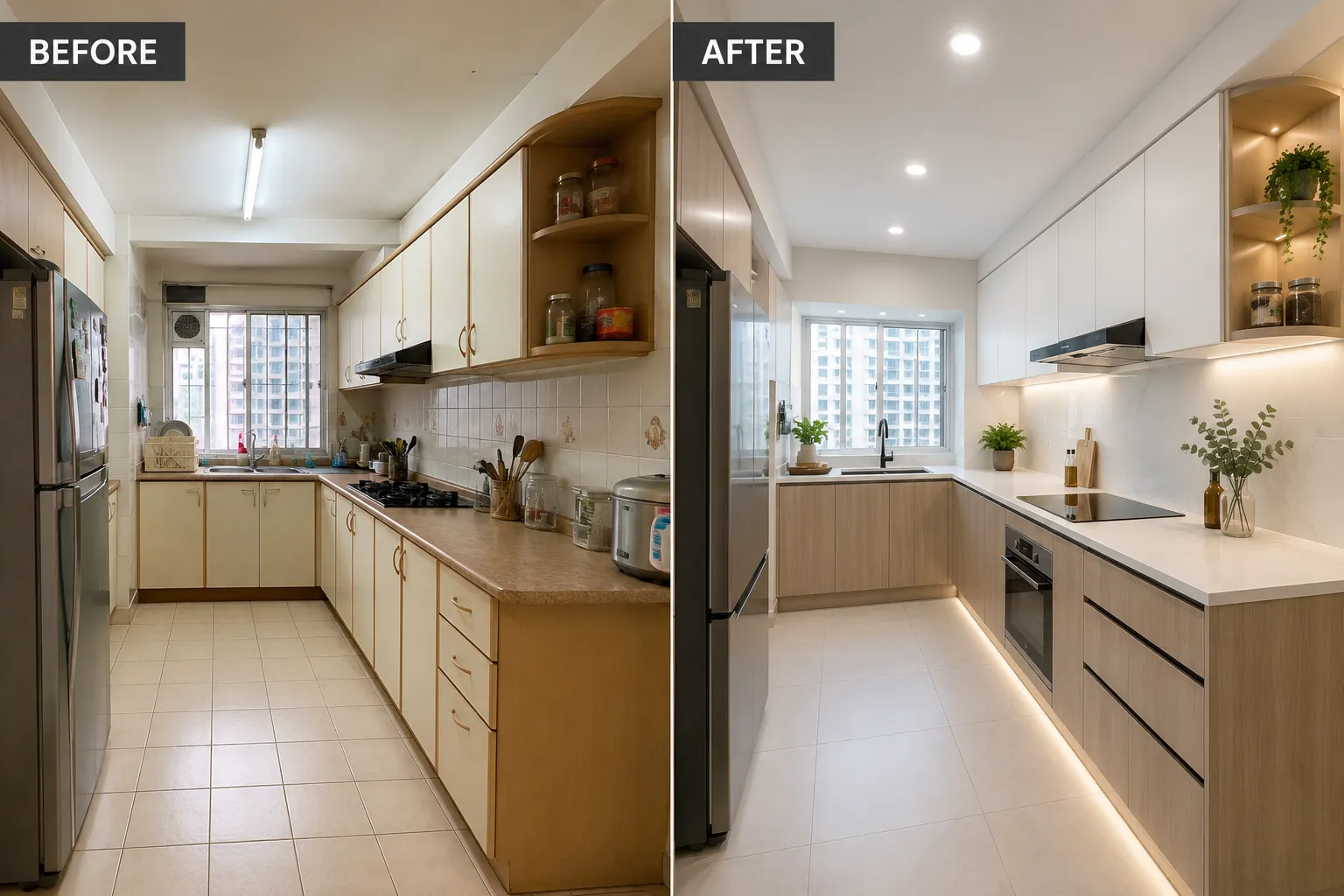
Same footprint, better use of it
Small kitchens rarely need more space — they need the existing layout used more deliberately, with storage and worktop reclaimed from wherever it was being wasted.
Storage Tips That Make the Biggest Difference
In a small kitchen, storage capacity is usually improved more by making better use of vertical space and corners than by simply adding more base cabinets.
Full-height cabinets
Extending cabinets to the ceiling uses space that is usually wasted, even if the top shelves are reserved for less-used items.
Corner carousel units
Rotating shelves or pull-out systems make corner cabinets far more usable than a fixed shelf reached by hand.
Pull-out pantry systems
Narrow pull-out units can fit into gaps that would otherwise be unused, adding dry storage without extra floor width.
Wall-mounted racks
Rails, hooks, and open shelving can hold frequently used items without taking up cabinet or counter space.
Cabinet materials also affect both durability and budget. Compare the options in our kitchen cabinet price per foot Malaysia guide.
It also helps to separate everyday items from occasional-use storage. Frequently used cookware, utensils and pantry items should be placed within easy reach, while seasonal appliances and bulk supplies can be stored in higher cabinets. This simple planning approach often improves usability more than adding extra cabinets.
Dimensions That Matter in a Small Kitchen
Small measurement mistakes can have a big impact in a compact kitchen. Before finalising cabinet drawings, consider appliance door swings, walkway clearance and preparation space so the kitchen remains comfortable to use every day.
Walkway clearance
Leave sufficient clearance between opposing cabinets so people can move comfortably while appliance doors and drawers open without obstruction.
Appliance door swing
Make sure the refrigerator, oven and dishwasher doors can fully open without hitting walls or adjacent cabinets.
Cabinet depth
Deeper cabinets provide more storage but can reduce valuable walking space in narrow kitchens.
Lighting
Good task lighting under wall cabinets makes compact kitchens feel larger and improves everyday usability.
Rather than copying measurements from another home, designers usually evaluate the available floor space together with appliance sizes, cabinet depth and daily cooking habits. A layout that feels comfortable for one household may feel restrictive for another if multiple people use the kitchen at the same time or larger appliances are planned.
Common Small Kitchen Renovation Mistakes
Most small kitchen renovation problems occur when homeowners prioritise appearance over everyday functionality.
Oversized appliances
A fridge or oven that is too large for the layout can block walkways and cabinet doors, even if it looked fine in the showroom.
Too many upper cabinets
Wall-to-wall upper cabinets can make a small kitchen feel closed in. Leaving some open shelving or a lighter finish can help.
Ignoring walkway clearance
A layout can look efficient on paper but feel cramped in practice if door swings and walkway width are not checked properly.
Forgetting ventilation
Compact kitchens can trap heat, smoke, and smells quickly if hood placement and ventilation are not planned alongside the layout.
Another common mistake is designing the kitchen around showroom displays rather than actual daily routines. A layout that looks impressive may leave insufficient preparation space beside the sink or cooktop, forcing homeowners to work in awkward positions. Planning around everyday cooking habits usually produces a more practical result than copying a display kitchen.
Small Kitchens by Property Type
Small kitchens show up differently depending on property type, and the renovation approach usually needs to adjust accordingly.
Condo kitchens
Condo kitchens throughout Kuala Lumpur and Selangor often have fixed plumbing points, management renovation hours and lift booking requirements that should be considered before changing the kitchen layout.
Older terrace kitchens
May have more floor area than a condo but still feel small due to older layouts, narrow doorways, or awkward plumbing positions.
Studio apartments
Often need the kitchen to blend visually with the living space, so cabinet finish and openness matter as much as storage.
Renovation priorities also vary depending on occupancy. Investment properties may prioritise durable finishes and easy maintenance, while owner-occupied homes often benefit more from customised storage, improved workflow and appliance integration that suits the household’s cooking habits.
How to Plan a Small Kitchen Renovation
Share your kitchen basics
Start with property type, rough measurements, kitchen photos, and budget range so the scope can be matched to the actual footprint.
Review layout options
Compare layout options based on room shape, door positions and existing plumbing to find the most practical use of the available space.
Plan storage and appliances
Identify where vertical storage, corner solutions and appliance clearance will have the biggest daily impact. Confirm appliance dimensions before cabinet fabrication begins so refrigerator doors, ovens and drawers can all operate without obstructing walkways.
Confirm the renovation scope
Finalise the cabinet materials, countertop, hardware, and installation scope before comparing detailed quotations.
Why Homeowners Use My Reno Service for Small Kitchen Planning
Simple quote start
Start with kitchen photos, rough measurements and your budget range so planning can begin with realistic layout and storage recommendations.
Layout-first planning
Movement and storage are reviewed before cabinet colours and finishes are chosen.
KL and Selangor context
Condo kitchens often have fixed plumbing locations, renovation time restrictions and lift booking requirements that can influence layout changes.
Budget-band clarity
Clear budget bands help homeowners understand what is typically achievable at different investment levels before requesting quotations.
Small Kitchen Renovation Malaysia FAQs
How much does a small kitchen renovation cost in Malaysia?
A small kitchen renovation in Malaysia commonly ranges from RM8,000 to RM40,000+, depending on cabinet length, countertop material, appliance integration, and how much layout change is involved. Smaller kitchens generally require less material, although layout changes, premium finishes and custom storage can still increase the overall cost.
What layout works best for a small kitchen?
Single-wall, galley, and L-shaped layouts usually work best for small kitchens because they keep movement compact while still separating prep, cooking, and storage zones. The right choice depends on the room shape, door and window positions, and whether the kitchen connects to a dining or living area.
How can I add more storage to a small kitchen?
Tall cabinets that use full ceiling height, corner carousel units, pull-out pantry systems, and wall-mounted racks usually add more usable storage than adding extra floor cabinets. Vertical storage is often the biggest opportunity in a small Malaysian kitchen.
Should I remove a wall to make my kitchen feel bigger?
Sometimes, but not always. Removing a wall can improve light and flow, but it may also affect plumbing, wiring, and structural elements, especially in condos and older terrace homes. A cheaper alternative is often lighter cabinet colours, better lighting, and reducing visual clutter.
Are small kitchens harder to renovate than large kitchens?
Not necessarily harder, but they need more precise planning. Every appliance, cabinet depth, and walkway measurement matters more in a small kitchen because there is less room for error. Poor planning shows up faster in a compact layout than in a larger one.
What should I avoid in a small kitchen renovation?
Avoid oversized appliances that block walkways, too many upper cabinets that make the room feel closed in, dark finishes without enough lighting, and skipping ventilation planning. These mistakes are easy to make when homeowners focus on style before daily usability.
What should I prepare before asking for a small kitchen quote?
Share your kitchen photos, rough measurements, property type, budget range, and preferred layout direction. These details help identify whether the project is a simple cabinet refresh or needs layout changes before a more detailed quotation is prepared.
Can every small kitchen be made open plan?
Not always. Some walls contain structural elements, plumbing or electrical services that cannot be removed without additional engineering work. Even when walls can remain, lighter finishes, improved lighting and better storage often create a more open feel without major structural changes.
Plan Your Small Kitchen Renovation With Clearer Layout Choices
Share your kitchen photos, rough measurements, property type and budget range. We’ll help compare layout options, identify storage opportunities and highlight practical constraints before you request detailed quotations.
- Compare space-saving layout options
- Prioritise storage that actually gets used
- Plan appliance clearance before fabrication