
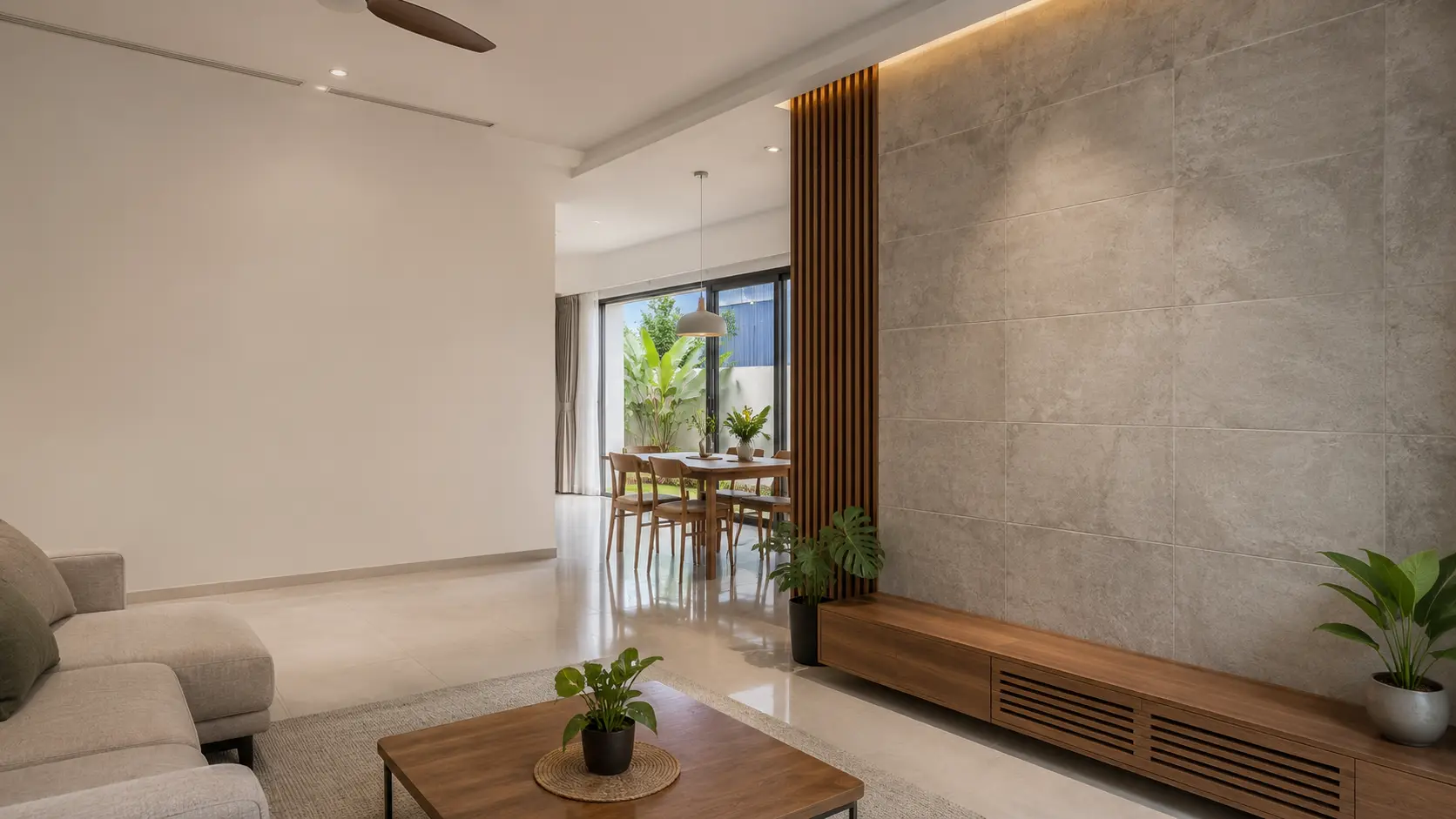
Wall Tile Installation in Kuala Lumpur & Selangor: Bathroom, Kitchen and Feature Wall Tiling
Wall tiling covers everything from a full bathroom retile to a kitchen backsplash or a single feature wall, and it's one of the most requested finishes in Malaysian condos, apartments and landed homes. My Reno Service installs wall tiles for homes across KL, Selangor and the wider Klang Valley, working with ceramic, porcelain, mosaic, subway and natural stone-look tiles.
A shower wall and a kitchen backsplash rarely call for the same tile. Water exposure, how the wall gets used day to day, and how much of a style statement you want all shape what actually makes sense before you start comparing showroom samples.
Send us photos of the wall or room you're tiling, roughly how much wall area is involved, and your budget range, and we'll help you work out which tile type actually makes sense before you commit to a design.
What Does Wall Tile Installation Actually Cover?
Wall tile installation means fixing new tiles - ceramic, porcelain, mosaic, subway or natural stone-look - directly onto a prepared wall surface, then grouting and sealing the finish. It covers everything from a full bathroom retile to a small kitchen backsplash or a single feature wall behind a TV console or dining table.
Unlike floor tiling, wall tiles don't carry foot traffic or furniture load, so the tile itself can often be thinner and lighter. The bigger priority is proper surface preparation, waterproofing in wet areas, and getting the layout right around sockets, taps and corners before a single tile goes up.
This page covers wall tiling as a general finish - bathrooms, kitchens, feature walls and other interior spaces. For floor tiling specifically, see our floor tiles page instead, and for bathroom-specific waterproofing and anti-slip requirements, see our bathroom tiles page.
Which Wall Tile Do You Need?
A quick starting point before the fuller breakdown below - most homeowners land in one of these four situations.
Retiling a bathroom or shower
Porcelain or natural stone-look tiles paired with proper waterproofing handle daily water exposure without trapping moisture behind the wall.
Adding a kitchen backsplash
Subway or mosaic tiles are the most requested choice here, creating an easy-to-wipe surface for oil and water splashes behind the hob and sink.
Want a bold accent wall
Large-format slabs and marble-look porcelain can turn an ordinary living room or dining wall into a feature, without the weight of real stone cladding.
Working with a tight budget
Standard-format ceramic tiles keep material cost down while still bringing a genuine refresh to a bathroom or kitchen wall.
Why Wall Tiling Is Still So Popular
Wall tiling earns its place in Malaysian bathrooms and kitchens for a handful of practical reasons, on top of the style options it opens up.
Handles water and humidity well
Properly grouted and, where needed, waterproofed tile stands up to shower spray, sink splashes and Malaysia's humidity without swelling or trapping moisture.
Easy to wipe clean
A glazed or polished tile surface wipes down far more easily than paint or wallpaper, which matters most directly behind a hob or sink.
A huge range of looks
From plain ceramic through subway and mosaic patterns to marble-look slabs, wall tiling covers a wider style and budget range than most other wet-area finishes.
Protects the wall long-term
A tiled wall shrugs off splashes, grease and the occasional knock in a way painted plaster generally can't, which keeps the wall looking fresh for longer.
Adds real value in bathrooms and kitchens
A well-tiled bathroom or kitchen is one of the details buyers and renters notice first, and a well-installed tile job commonly lasts decades with only grout upkeep.
Scales to the scope you need
From a small backsplash strip to a full bathroom retile or a living room feature wall, tiling scales from a few hundred ringgit to a larger project without changing the basic approach.
The Main Wall Tile Types Used in Malaysian Homes
Most wall tiling jobs in Malaysia use one of six material or format categories. Here's how they compare before the closer look at each one below.
| Tile type | Best for | Relative cost | Note |
|---|---|---|---|
| Ceramic wall tiles | Budget bathrooms, low-traffic walls | Budget (RM4–RM10 / sq ft) | Widely available, easy to cut and replace |
| Porcelain wall tiles | Bathrooms, kitchens, busy wet areas | Mid-range (RM8–RM18 / sq ft) | Denser and less porous than ceramic |
| Subway tiles | Kitchen backsplashes, classic bathroom looks | Budget–Mid (RM6–RM14 / sq ft) | Simple brick-bond pattern, easy to source |
| Mosaic tiles | Backsplashes, shower niches, feature strips | Mid–Premium (RM15–RM35 / sq ft) | Labour-intensive install pushes up cost |
| Large-format slab tiles | Feature walls, seamless shower walls | Premium (RM20–RM45 / sq ft) | Fewer grout lines, needs careful handling |
| Natural stone / marble-look | Premium feature walls, statement bathrooms | Premium (RM25–RM55+ / sq ft) | Unique veining if genuine stone, needs sealing |
Ceramic Wall Tiles
Budget (RM4–RM10 / sq ft). Best for budget bathrooms and low-traffic walls - widely available, easy to cut and replace.
Porcelain Wall Tiles
Mid-range (RM8–RM18 / sq ft). Best for bathrooms, kitchens and busy wet areas - denser and less porous than ceramic.
Subway Tiles
Budget–Mid (RM6–RM14 / sq ft). Best for kitchen backsplashes and classic bathroom looks - a simple brick-bond pattern that's easy to source.
Mosaic Tiles
Mid–Premium (RM15–RM35 / sq ft). Best for backsplashes, shower niches and feature strips - labour-intensive install pushes up cost.
Large-Format Slab Tiles
Premium (RM20–RM45 / sq ft). Best for feature walls and seamless shower walls - fewer grout lines, needs careful handling.
Natural Stone / Marble-Look
Premium (RM25–RM55+ / sq ft). Best for premium feature walls and statement bathrooms - unique veining if genuine stone, needs sealing.
Indicative KL & Selangor pricing, reviewed 2026. These figures cover material and installation for standard wall heights and access. Not included: waterproofing membrane, hacking out existing tiles, and plumbing or electrical point relocation, which are usually priced separately once the site condition is known.
Ceramic Wall Tiles
Best for: budget bathrooms and low-traffic walls where cost matters more than premium finish.
Ceramic wall tiles are a red or white clay body fired at a lower temperature than porcelain, then finished with a printed glaze. That glaze carries the colour and pattern, which keeps manufacturing cost down and explains why ceramic is usually the most affordable option in the showroom.
Because walls don't take the same abrasion as floors, ceramic's lower durability matters less here than it would underfoot, making it a genuinely reasonable choice for many bathroom and utility area walls.
Porcelain Wall Tiles
Best for: bathrooms, kitchens and any wall that sees regular water or grease exposure.
Porcelain is denser and less porous than ceramic, which makes it more resistant to staining and moisture over time - a genuine advantage on a shower wall or behind a kitchen sink where the surface gets wet daily.
Printed finishes have improved a lot too, so wood-look and concrete-look porcelain panels are now a common alternative to timber or exposed screed on a feature wall, with tiling's durability built in.
Subway Tiles
Best for: kitchen backsplashes and bathrooms after a clean, classic look that won't date quickly.
Subway tiles are a rectangular tile, usually laid in an offset brick-bond pattern. The look is simple by design, which is exactly why it's held up as a popular choice for years rather than following a passing trend.
Grout lines run the length of every tile edge, so consistent spacing matters more here than with a large-format slab - a well-laid subway wall looks noticeably crisper than a rushed one.
Mosaic Tiles
Best for: backsplashes, shower niches and feature strips that need a bit more texture or pattern.
Mosaic tiles are small individual pieces, usually pre-mounted on a mesh backing sheet for installation. That makes them well suited to curved niches and tight cutouts that a large tile can't follow cleanly.
The trade-off is labour - far more grout lines and pieces mean a slower, more careful install than a same-sized area in subway or large-format tile, which is why mosaic sits toward the higher end of the cost range here.
Large-Format Slab Tiles
Best for: feature walls and shower walls wanting a seamless, minimal-grout look.
Large-format tiles - often 600mm x 1200mm and up - cover more wall with fewer joints, which reads as cleaner and more contemporary and is one reason they've become popular for both showers and living room feature walls.
They're heavier and less forgiving of an uneven wall than a small tile, so we check the substrate carefully and use proper support during installation - rushing this step is where lippage and cracking usually come from.
Natural Stone / Marble-Look Tiles
Best for: premium feature walls and statement bathrooms where a genuine, higher-end material is the priority.
Genuine marble or stone veneer tiles have natural veining that no printed tile can fully replicate, and they carry real weight and presence on a feature wall. They also need periodic sealing, since natural stone is more porous than porcelain.
For homeowners chasing the look on a tighter budget, marble-look porcelain is often the practical middle ground - most people can't tell the difference from a few feet away, at a fraction of the cost and maintenance.
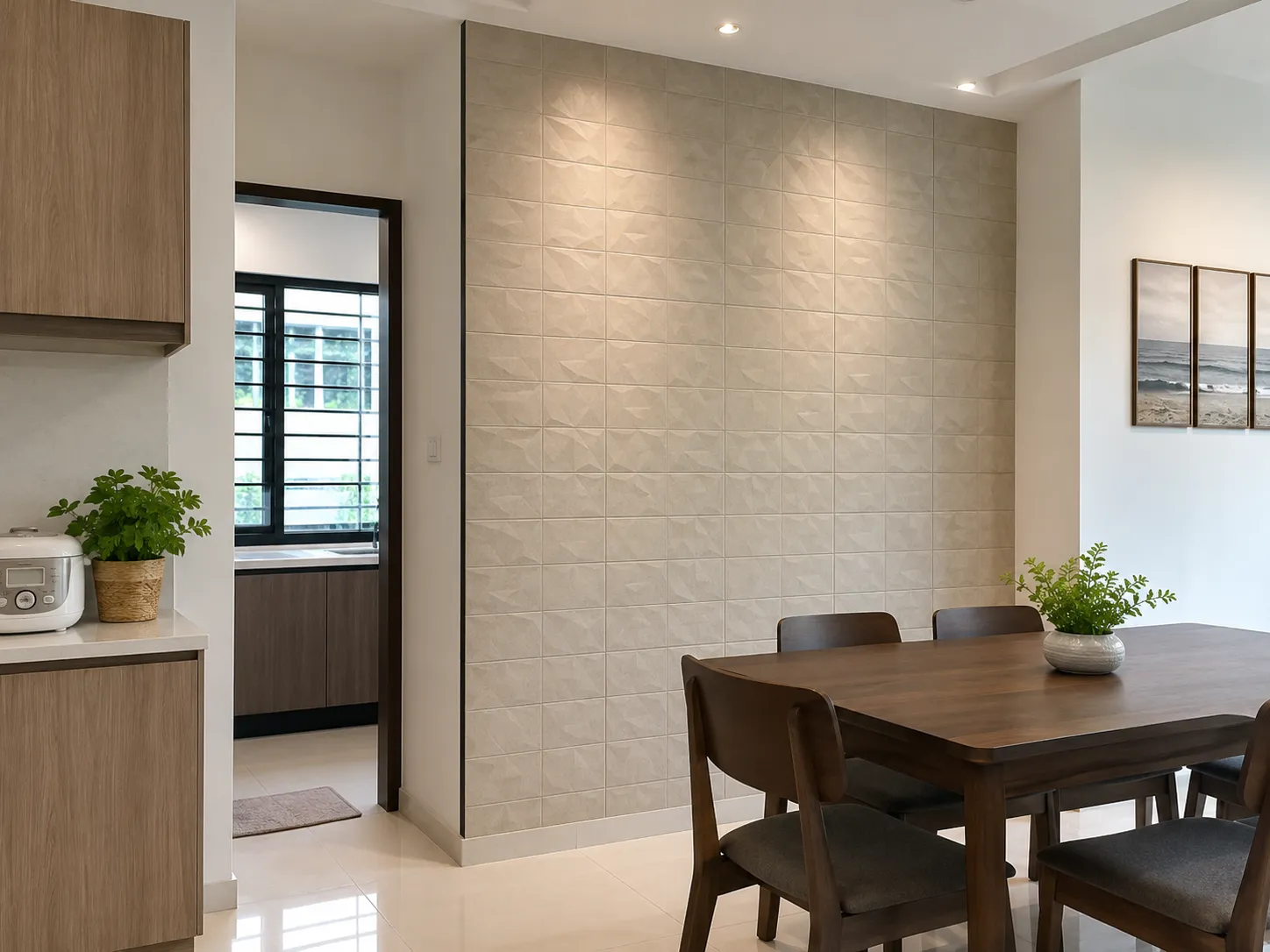
A textured tile wall changes how a plain corner reads
A 3D textured tile finish catches light differently across the day, turning a plain dividing wall between the kitchen and dining area into a genuine feature - without any panelling or carpentry involved.
Where Wall Tiling Works Best
Which part of the home it's going in has a big influence on the right tile type and how much prep work is needed first.
Bathrooms and showers
The most common wall tiling job in Malaysia - full-height tiling in wet zones, with waterproofing behind the tile and careful attention to niches and fittings.
Kitchen backsplashes
Subway or mosaic tile behind the hob and sink gives an easy-to-clean surface that handles oil and water far better than plain painted wall.
Feature and accent walls
Large-format slab or marble-look tiles can carry real presence behind a TV console or dining table, without the weight of genuine stone cladding.
Wall Tiles vs Paint vs Glass Splashback
For a kitchen backsplash or a wet-area wall, tiling isn't the only option. Here's how it compares to the two most common alternatives.
| Factor | Wall tiles | Painted wall | Glass splashback |
|---|---|---|---|
| Relative cost | RM4–RM55+ / sq ft | Lowest - from around RM3 / sq ft | Mid–Premium, priced per panel |
| Water and heat resistance | Very good, especially porcelain and stone | Poor without a specialist heat/water-resistant paint | Very good, and easy to wipe down |
| Maintenance | Grout needs periodic cleaning and resealing | Needs repainting every few years in wet zones | No grout, but shows fingerprints and streaks |
| Best use | Full bathroom walls, kitchen backsplashes, feature walls | Dry-area walls, budget refreshes | Kitchen backsplashes wanting a seamless, grout-free look |
Wall Tiles
RM4–RM55+ / sq ft. Very good water and heat resistance - best for full bathroom walls, backsplashes and feature walls.
Painted Wall
Lowest cost, from around RM3 / sq ft. Poor water/heat resistance without specialist paint - best for dry-area walls and budget refreshes.
Glass Splashback
Mid–Premium, priced per panel. Very good water/heat resistance - best for kitchen backsplashes wanting a seamless, grout-free look.
If a harder-wearing but less permanent accent wall is what you're after instead - somewhere panelling, wallpaper or paint might suit better than tile - see our feature wall page for a fuller comparison of those materials.
Factors That Affect Wall Tiling Cost
The tile grade is only one part of the total cost. These factors often move the final quotation just as much.
Tile size and format
Mosaic and small-format tiles need more grout lines and cutting time; large-format slabs need a flatter wall and more careful handling. Both push cost up in different ways.
Wall area and height
A full-height bathroom retile needs more material and labour than a waist-height backsplash, though a larger job often costs less per square foot due to fixed setup costs.
Waterproofing requirements
Shower walls and other wet zones need a waterproofing membrane applied before tiling, which adds material, labour and curing time beyond the tile itself.
Existing wall condition
Hollow, cracked or badly uneven plaster often needs patching or hacking out old tiles first before new tiling can be applied properly.
Layout complexity
Niches, corners, sockets, taps and shower fittings all need careful cutting and layout planning, which adds time compared to a flat, uninterrupted wall.
Grout and finishing choices
Contrasting grout colours, epoxy grout for wet areas, and trim or edging strips are commonly priced separately from the base tiling cost.
Because so much of the cost depends on what's underneath the existing wall and how much waterproofing and prep it needs, we generally can't give an accurate number without seeing it first. A site visit lets us check the wall condition properly, which is usually the difference between a rough estimate and a quotation you can actually plan around.
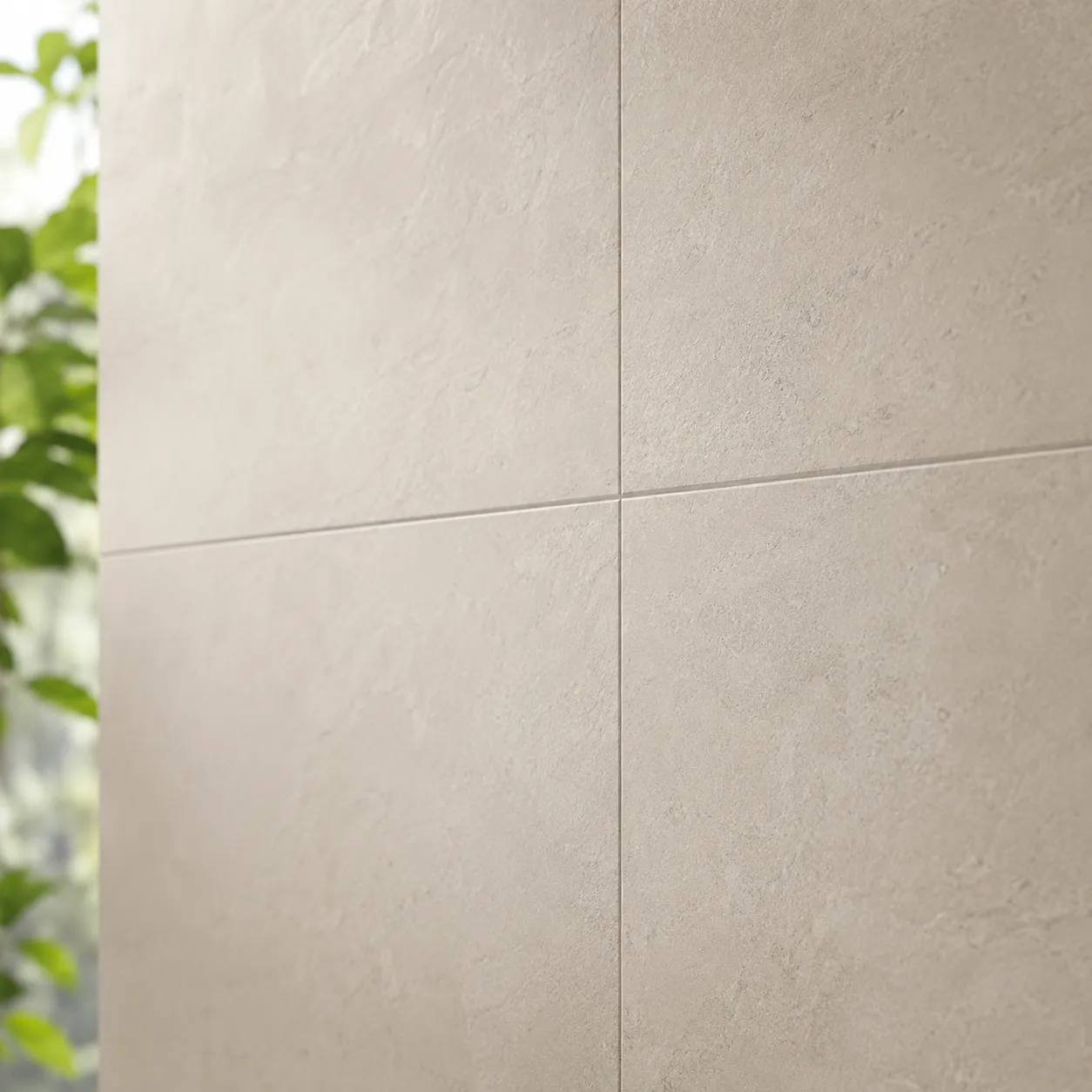
A straight grout line is harder to get than it looks
Up close, this is what good wall tiling actually looks like - even spacing, a straight run between tiles and no lippage at the joints. It's a small detail, but it's often the first thing that gives away a rushed installation.
Our Wall Tiling Process
A clear process from first message to final walkthrough, so you know what to expect at each stage before committing to a tile.
Initial consultation
Share photos of the wall or room, roughly how much area is involved, and the look you're considering, along with your budget range.
Site visit
We check the existing wall condition, any old tiles, and whether waterproofing or plumbing and electrical work needs coordinating first.
Measurement and layout planning
Precise measurements are taken and the tile layout is planned around fittings, corners and any niches, so cuts and joints fall where you'd want them.
Tile selection
Together we'll compare ceramic, porcelain, mosaic, subway and natural stone-look options to find the right balance of look, durability and budget.
Quotation
A detailed quotation is prepared covering the confirmed tile, waterproofing if needed, old tile removal, and layout complexity identified during the site visit.
Surface prep and waterproofing
The wall is prepared, hacking out old tiles where necessary, and a waterproofing membrane is applied and left to cure in wet-area zones.
Tiling and grouting
Tiles are set to the confirmed layout, left to bond, then grouted with proper joint spacing and sealed where needed.
Final walkthrough
We review the finished wall with you, checking alignment, grout lines and finishing details before considering the job complete.
What to Prepare Before a Site Visit
Having a few things ready before we visit makes the assessment faster and the quotation more accurate.
Photos of the wall or room
Current photos, including any existing tiles, fittings or damage, help us assess the wall before we visit.
A rough wall area
An approximate size for the wall or walls involved, even a rough estimate helps us scope the visit.
Any tile inspiration
Reference photos or showroom names for a look you like, so we can advise on suitable, in-stock alternatives.
Your management's renovation rules
If you're in a condo or apartment, check your JMB's work-hour restrictions and approval process for hacking work ahead of time.
Common Wall Tiling Mistakes to Avoid
A few recurring mistakes cause most of the regret homeowners feel after a wall tiling job.
Skipping waterproofing behind tiles in wet areas
Tile and grout alone aren't fully watertight over time. Skipping the membrane behind a shower wall is one of the more common causes of leaks into neighbouring rooms or units below.
Tiling straight over damaged or hollow old tiles
New tiles fixed over a hollow or already-detached old surface can fail early, since they're only as secure as whatever they're bonded to underneath.
Choosing a high-gloss tile too close to a hob
A glossy tile looks sharp in the showroom, but heat marks and grease show up more visibly on a high-gloss surface directly behind a stove than on a matte or textured finish.
Not planning fitting cutouts before ordering tiles
Sockets, taps, shower mixers and niche positions all need to be settled before tiles are ordered and cut - moving one afterward often means an awkward patch job.
Skipping JMB or management approval
Hacking out old tiles is loud and dusty enough that most condos require prior notice and a defined work-hour window - starting without approval is one of the more common causes of a paused or fined renovation.
When We Wouldn't Recommend Retiling the Wall
Wall tiling is a strong, durable choice for most bathrooms, kitchens and feature walls, but it isn't automatically the right answer for every wall. These are the cases where we'd usually raise an alternative.
Existing tiles are already flat and sound
If the current wall tiling is level, undamaged and just visually dated, tiling directly over it with a specialist adhesive is often faster and less disruptive than hacking it out.
Wanting a soft, warm accent wall
For a dry-area feature wall where warmth and texture matter more than water resistance, wood panelling or wallpaper often suits the room better than tile - see our feature wall page.
A very tight renovation timeline
Waterproofing, curing and grouting all take time. If the schedule genuinely can't accommodate several days of wet trades, a lower-disruption finish is often more realistic.
Structural or plumbing issues underneath
If the wall has a leak, hollow section or plumbing issue behind it, that needs fixing first - tiling over an unresolved problem just hides it until it resurfaces later.
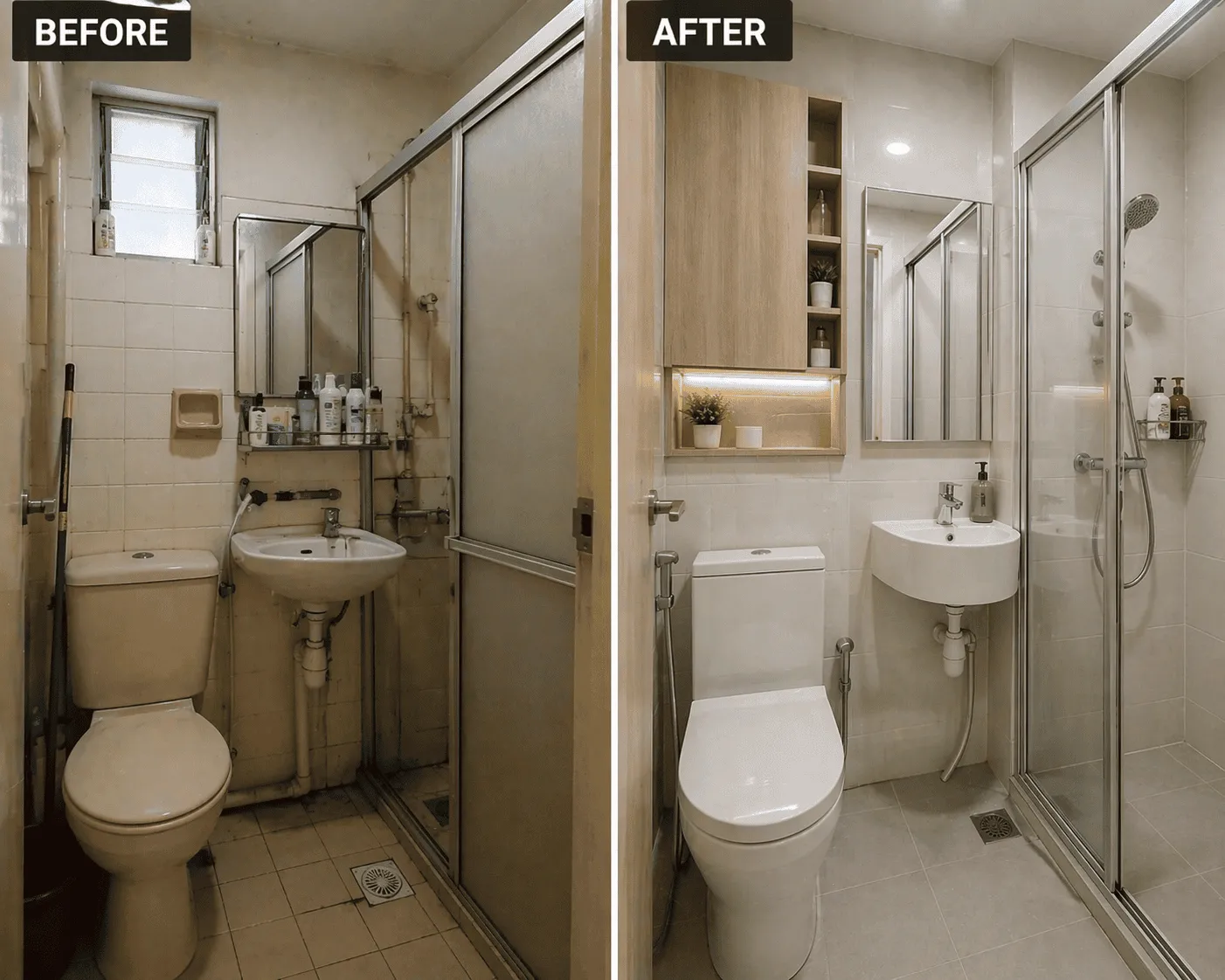
The same footprint, a completely different feel
The layout of this bathroom barely changed - what made the difference was hacking out the old, stained tiling and starting fresh with a lighter tile, properly waterproofed and finished with consistent grout lines throughout.
Three Common Wall Tile Installation Scenarios
The full bathroom retile
A condo bathroom with cracked, dated tiles gets a full retile. A few taps reveal hollow sections behind the old tiles, so they're hacked out completely, the substrate patched, a waterproofing membrane applied and left to cure, then new 300mm x 600mm porcelain tiles set with a built-in shower niche. A job like this typically takes about a week and lands in the RM3,500-RM6,000 range.
The kitchen backsplash refresh
A terrace house kitchen with a plain painted wall behind the hob gets a subway tile backsplash instead. The wall is cleaned, primed and levelled before the tiles go up in a classic offset pattern, adding real protection where the paint was starting to stain from oil and water splashes. A backsplash this size usually takes 1-2 days and costs somewhere between RM800 and RM2,000.
The living room feature wall
A condo living room wants a striking TV console wall without the weight of stone cladding. The wall is checked for flatness first, since large-format slabs show up any dip or bow far more than a small tile would, then 600mm x 1200mm marble-look porcelain goes up with minimal grout lines for a near-seamless finish. A wall this size usually takes about 4-6 days, with material and installation landing between RM4,000 and RM8,000.
Why Homeowners Work With Us for Wall Tiling
Wall tiling looks straightforward until the substrate isn't sound or the waterproofing gets skipped. Getting those details right is what separates a wall that lasts from one that needs redoing.
Clear scope and detailed quotations
You'll know what tile, waterproofing, hacking and finishing is included before work starts, not just a lump-sum number.
Waterproofing done properly
Wet-area membranes are applied and cured before tiling starts - it's not a step we skip to save time, since it's the part that causes problems years down the line.
Honest advice on tile vs alternatives
If your existing wall tiles are a good candidate to tile straight over, or a painted or panelled finish would suit better, we'll tell you upfront.
A transparent process
From the first site visit through to final walkthrough, you'll know what's happening at each stage rather than waiting for a surprise at the end.
For homeowners planning tiling as part of a larger project, this pairs naturally with a full home renovation, a kitchen renovation, or updates to a living room design - wall tiling is usually easiest to plan alongside plumbing, electrical points and flooring rather than as a standalone job. If it's the floor you're retiling, see our floor tiles page, and for bathroom-specific waterproofing and anti-slip requirements, see our bathroom tiles page. For our full list of standalone upgrades, see individual renovation services.
Wall Tiles Malaysia FAQs
What's the difference between wall tiles and floor tiles?
Wall tiles don't need to carry foot traffic or furniture load, so they can be thinner and lighter than floor tiles, and some finishes - like certain glazed ceramics - are made specifically for walls and aren't rated to handle floor-level abrasion. Many porcelain and natural stone tiles can be used on both, but a tile rated for floors isn't automatically the right pick for a wall, and vice versa. See our floor tiles page if it's the floor you're after instead.
How much does wall tile installation cost in Malaysia?
As a rough guide, ceramic wall tiles run around RM4-RM10 per sq ft, porcelain RM8-RM18, subway tiles RM6-RM14, mosaic RM15-RM35, large-format slab tiles RM20-RM45, and natural stone or marble-look tiles RM25-RM55+. These figures cover material and standard installation - waterproofing, old tile removal and any plumbing or electrical point relocation are usually quoted separately once the site condition is known.
Do I need JMB or management approval to retile a bathroom or kitchen wall?
In most condos and apartments, yes. Removing old tiles is loud and dusty enough that most JMBs and management corporations require prior notice, a defined work-hour window and sometimes a refundable renovation deposit before hacking work can start. Starting without approval is one of the more common causes of a paused or fined renovation.
Can new wall tiles be installed directly over old tiles?
Sometimes, if the existing tiles are flat, sound and properly bonded to the wall. In that case, a specialist adhesive can let new tiles go straight over the old ones, which saves the time and mess of hacking. If the old tiles are hollow, cracked or already layered over an earlier tiling job, they'll usually need to come off first - we check this during the site visit.
Do bathroom and kitchen walls need waterproofing before tiling?
Bathroom walls in wet zones - shower areas especially - generally need a waterproofing membrane applied to the substrate before tiling, since tile and grout alone aren't fully watertight over time. Kitchen backsplashes behind a sink or hob don't usually need the same membrane, but the wall surface still needs to be properly prepared so tiles bond securely.
What size wall tiles are trending in Malaysian homes right now?
Large-format slab tiles - often 600mm x 1200mm and up - have become popular for shower walls and feature walls, mainly because fewer grout lines read as cleaner and more contemporary. At the same time, mosaic and subway tiles remain a strong choice for kitchen backsplashes and smaller feature strips, where a bit more pattern and texture is welcome.
Is mosaic or subway tile a good choice for a kitchen backsplash?
Both work well and it mostly comes down to style. Subway tile gives a clean, classic brick-bond look and is easier to keep grout lines consistent across a longer run. Mosaic tiles - small individual pieces on a mesh backing - add more texture and pattern, and are often used as a feature strip behind a hob rather than across an entire backsplash, partly because the extra grout lines mean more cleaning.
How long does wall tile installation take?
A kitchen backsplash usually takes 1-2 days. A full bathroom retile, including waterproofing and curing time, commonly runs 4-7 days. A larger feature wall in natural stone or large-format slab tiles can take 4-6 days depending on wall size and how much cutting is needed around fittings.
Can wall tiles be used as a feature wall outside the bathroom or kitchen?
Yes - large-format stone-look or marble-look tiles are increasingly used as a living room or dining feature wall, often behind a TV console, giving a similar effect to stone cladding without the added weight. If you're comparing this against panelling, wallpaper or paint for the same wall, our feature wall page covers those alternatives in more detail.
What's the risk with large-format wall tiles specifically?
They expose an uneven wall far more than a small tile does. If the substrate underneath isn't flat enough, you'll see lippage - one tile edge sitting slightly proud of its neighbour - and large slabs are heavier and more awkward to handle on a vertical surface, so proper temporary support during installation matters more than it does with a standard-size tile.
How do I maintain tiled walls and grout lines?
Grout is porous, so it picks up soap scum, oil and mould over time, particularly in showers and behind hobs. A periodic scrub with a grout-safe cleaner and resealing the grout every year or two slows staining considerably. Large-format tiles with fewer joints generally need less upkeep than mosaic or subway layouts with more grout lines.
Should I choose wall tiles or a feature wall panel for an accent wall?
It depends on the look and the budget. Tiling gives a harder, more permanent finish that handles moisture and heat well, which matters if the wall is anywhere near a kitchen or bathroom. Wood panelling, 3D panels or wallpaper are usually cheaper and quicker to install, and easier to change again later if you're not fully committed to the look yet. See our feature wall page for a full comparison of those options.
Which areas do you cover for wall tile installation?
Wall tile installation enquiries commonly come from Kuala Lumpur, Selangor, Petaling Jaya, Subang Jaya, Shah Alam, Puchong, Cheras, Kepong, Ampang, Klang and Kajang. Project suitability depends on property type, wall access and the scope of work involved.
Ready to plan your wall tiling?
Send us a few photos of the wall or room, your rough wall area and your budget range. We'll help you understand what's realistic - including whether waterproofing or old tile removal is needed - before you commit to a tile.