
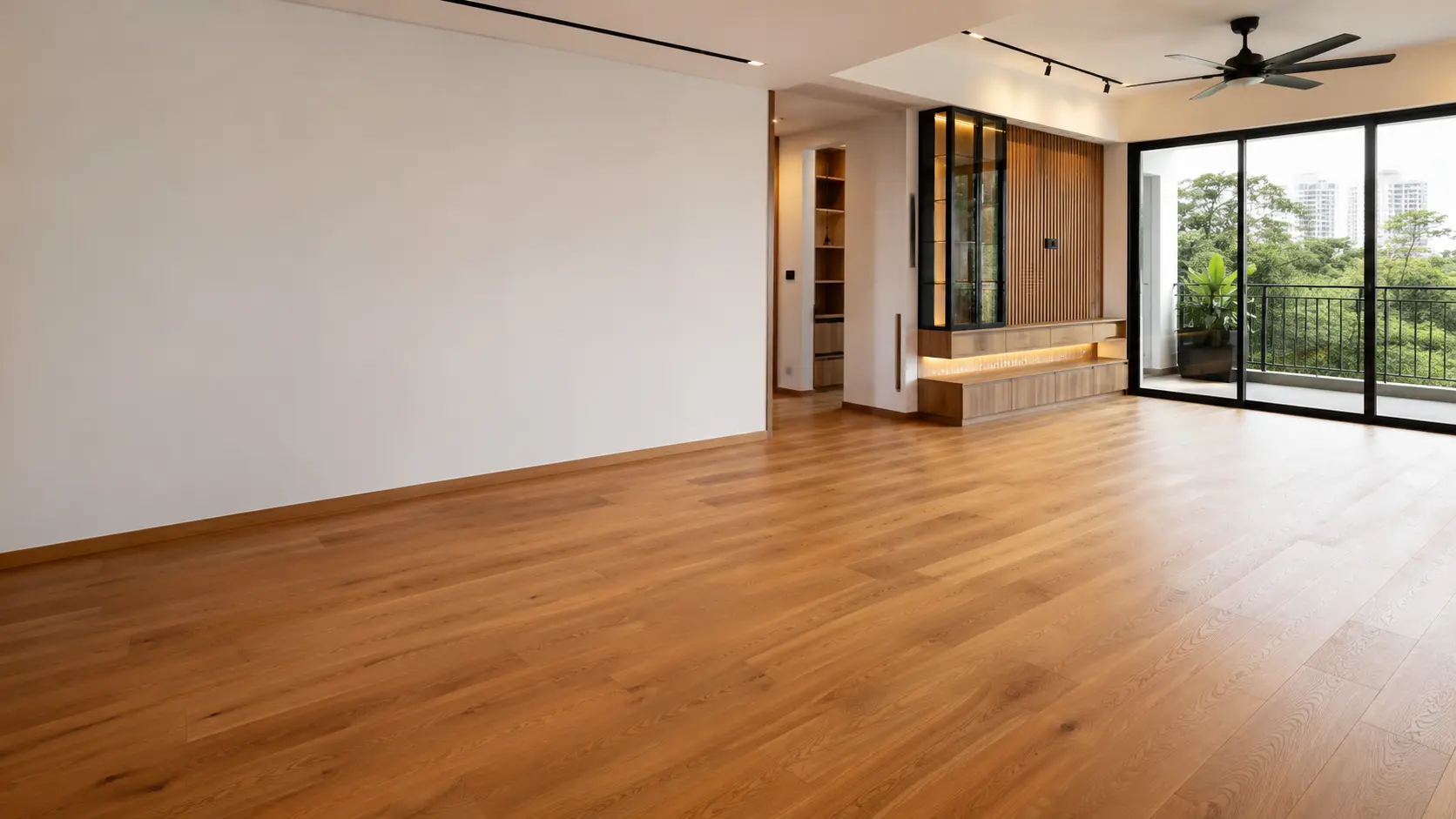
Wood Flooring in Kuala Lumpur & Selangor: Solid Hardwood and Engineered Wood
Real timber brings a warmth and depth that's hard to replicate with printed flooring. My Reno Service installs solid hardwood and engineered wood for condos, apartments and landed homes across KL, Selangor and the wider Klang Valley.
Whether solid hardwood or engineered wood is the better fit mainly depends on the room, whether it's air-conditioned, and how much maintenance you're happy to live with.
Send us a few photos of the room, tell us whether it's air-conditioned, and we'll help you work out whether solid hardwood or engineered wood makes more sense.
What Is Wood Flooring?
Wood flooring covers two products that both use real timber. Solid hardwood is timber from top to bottom. Engineered wood still uses timber on the surface, but underneath it has a plywood or composite core that helps keep the boards more stable.
That construction matters in Malaysia. Solid timber responds to changes between humid outdoor air and dry, air-conditioned rooms, which can lead to gaps or cupping. The layered core in engineered boards handles those changes better while keeping a real wood surface.
Neither is the same as SPC flooring or laminate, which print a wood-look design onto a stone-plastic or wood-fibre core instead of using a timber wear layer. If your priority is the authentic look, texture and long-term character of real wood, this page is for you. If low maintenance and moisture resistance matter more, SPC flooring is worth comparing too.
Which Wood Flooring Do You Need?
A quick starting point based on the room, the budget and how much maintenance you're willing to take on - we'll confirm the right fit properly during a site visit.
We cover Kuala Lumpur and nearby areas including Petaling Jaya, Subang Jaya, Shah Alam, Puchong, Cheras, Mont Kiara and Bangsar.
For condo installations, check the management rules early. The application may require acoustic-underlayment details, a renovation deposit, loading-bay and lift bookings, lift protection and work within restricted hours. These steps can affect the start date even when the flooring itself is quick to install.
Air-conditioned room, want stability
Engineered wood - its plywood core resists the expansion and contraction that solid timber is prone to as humidity swings.
Want the most authentic feel, don't mind upkeep
Solid hardwood - timber from top to bottom that can be sanded and refinished several times over its life.
Condo with a tight renovation timeline
Engineered wood as a floating floor - it can often go directly over existing tiles, similar to SPC flooring, avoiding a hacking job.
Want the wood look on a tighter budget
Consider SPC flooring instead - a printed wood-look surface that's fully waterproof and needs far less maintenance than real timber.
Why Real Wood Flooring Is Worth It
Real timber costs more than the alternatives. Homeowners choose it for the way it feels, ages and can be repaired, not just for the initial look.
Natural grain and texture
Every plank has natural variation in grain, tone and character that a printed surface can only approximate, not replicate.
Warmer, more comfortable underfoot
Timber has a natural warmth and slight give that tile and stone don't, especially noticeable in bedrooms and living areas.
Can be sanded and refinished
Solid hardwood especially can be sanded back and refinished several times over its life, resetting a worn surface instead of replacing the floor.
Long lifespan
Well-maintained solid hardwood can last for decades. Engineered wood can serve a household for 20-30 years, depending on its wear layer and care.
A look that rarely goes out of style
Timber works with a wide range of interiors, from minimalist rooms to more traditional homes, and surface wear can often be repaired.
A wide range of species and tones
From light Scandinavian-style oak to deep, rich merbau, there's enough range in colour and grain to suit most interior directions.
Solid Hardwood vs Engineered Wood: Species and Types
The species and construction you choose affect cost, humidity tolerance and how the floor will need to be maintained over time.
| Type | Construction | Common species | Humidity tolerance |
|---|---|---|---|
| Solid hardwood - local species | Single piece of timber, full thickness | Merbau, balau, chengal | Moderate - can expand, contract or cup with humidity swings |
| Solid hardwood - imported species | Single piece of timber, full thickness | Oak, walnut, teak and other imported hardwoods | Moderate to lower - some imported species are less climate-tolerant than local timber |
| Engineered wood | Real timber veneer over a plywood/composite core | Oak and walnut veneers are most common | Good - the cross-layered core resists movement far better than solid timber |
Solid Hardwood - Local Species
Best for: homeowners who want solid timber at a more accessible price point, using a species suited to the local climate.
Merbau, balau and chengal are dense, durable Malaysian and regional hardwoods that have been used in local construction for generations. Chengal in particular is well regarded for its durability and resistance to decay.
Regional sourcing keeps these species more affordable than imported hardwoods. They are dense and long-lasting, though every solid timber floor still needs room to move.
Solid Hardwood - Premium Imported Species
Best for: feature areas and homeowners prioritising a specific look or grain character over cost.
Oak, walnut and teak each bring a distinct colour and grain pattern. Homeowners may choose one to match the wider interior or an existing piece of furniture.
They cost more than local species, and some are less forgiving of Malaysian conditions than merbau or balau. The room matters just as much as the timber you choose.
Engineered Wood - Oak & Walnut Veneers
Best for: air-conditioned rooms and condos where board stability matters more than maximum refinishing life.
An oak or walnut timber surface is bonded to a cross-layered plywood or composite core. Those layers help the board hold its shape when room conditions change.
It also installs faster than solid hardwood and can sometimes float over sound existing tiles. That is a practical advantage in condos with a tight renovation schedule.
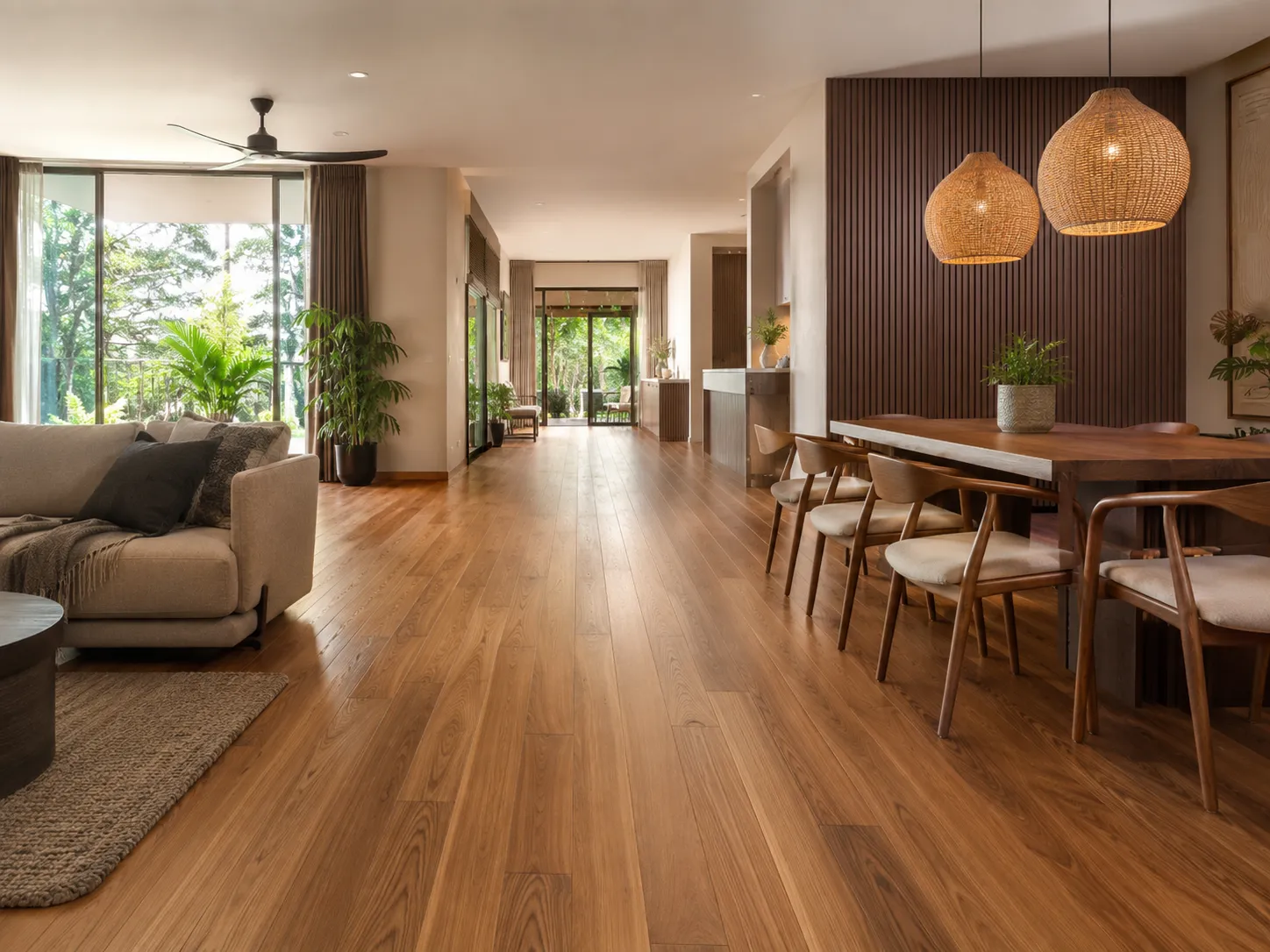
A material that ties a living and dining space together
Many homeowners carry the same timber flooring through the living and dining areas instead of limiting it to one room. The continuous tone helps an open-plan space feel connected.
Best Rooms for Wood Flooring
Real timber suits most living areas of the home. The main exception is continuously wet areas and rooms with intense, sustained direct sun.
Living and dining rooms
The most requested area for wood flooring, usually chosen to bring warmth and a natural material into the main gathering space of the home.
Bedrooms and home offices
Timber feels warmer underfoot than tile and creates a quieter, more comfortable space - well suited to a bedroom you walk across barefoot or an office you spend long hours in.
Hallways and staircases
A consistent timber tone through connecting spaces reads as more considered than mismatched flooring room to room, though stairs need proper nosing detail.
Solid Hardwood vs Engineered Wood vs SPC/Laminate
Real timber isn't always the right call for every room or budget. Here's how the three main options generally compare.
| Factor | Solid hardwood | Engineered wood | SPC flooring / laminate |
|---|---|---|---|
| Humidity tolerance | Lower - can expand, contract, cup or gap with humidity swings | Good - plywood core resists movement well | Very good (SPC) to fair (laminate can warp if wet) |
| Durability | Very durable, but softer surface than SPC | Durable, dependent on wear layer thickness | Very durable, dent and scratch resistant (SPC) |
| Refinishing ability | Can be sanded and refinished multiple times | Can sometimes be lightly sanded once, depending on veneer thickness | Cannot be sanded or refinished - the surface is a printed layer |
| Installation method | Usually nail-down or glue-down to a timber or prepared subfloor | Floating click-lock, glue-down, or nail-down depending on product | Floating click-lock, fast installation |
| Cost | Highest, especially imported species | Mid to upper-mid range | Lowest of the three |
Solid hardwood
Longest refinishing life and the most traditional construction, but less tolerant of moisture movement. Usually nailed or glued to a prepared subfloor and typically the highest-cost option.
Engineered wood
Real timber on the surface with better stability in humid, air-conditioned rooms. It can be floated, glued or nailed, though refinishing depends on veneer thickness.
SPC flooring or laminate
The lowest-cost and fastest option. SPC handles moisture particularly well and resists dents and scratches, but its printed surface cannot be sanded or refinished.
Wood Flooring Cost in Malaysia
Think of these as ballpark figures. The final price depends on the timber, how it is installed and the condition of the existing floor.
RM12-RM25 / sq ft
Engineered wood: oak or walnut veneer over a plywood core - the most common choice for condos and air-conditioned rooms wanting real timber with better humidity stability.
RM18-RM35 / sq ft
Solid hardwood, local species: merbau, balau or chengal - solid timber at a more accessible price point than imported species.
RM35-RM60+ / sq ft
Solid hardwood, premium imported species: oak, walnut, teak and other imported hardwoods, chosen for a specific look or grain character.
Indicative KL & Selangor pricing, reviewed 2026. These figures cover material and standard installation only. Not included: subfloor levelling or preparation, removing existing flooring, skirting, stair nosing and acoustic underlayment where required - final pricing depends on species, installation method and site condition, and is confirmed during a site visit.
Factors That Affect Wood Flooring Cost
Species is only part of the total. The existing floor, installation method and size of the job can make just as much difference.
Total floor area
Larger areas need more material and labour, but whole-floor jobs often work out cheaper per square foot because the setup costs are spread across a bigger area.
Species and grade
Imported hardwoods and higher-grade veneers cost noticeably more than local species and standard-grade engineered products.
Installation method
Nail-down and glue-down installations take more labour and subfloor preparation than a floating click-lock floor.
Subfloor condition
An uneven, cracked or hollow-sounding floor may need levelling or repair before the timber can be installed properly.
Removing old flooring
If the existing floor can't be left in place - because it's too uneven, damaged or unsuitable - removal and disposal adds a separate line item.
Condo acoustic requirements
Some condo management corporations require acoustic underlayment beneath hard flooring. It adds to the cost and may be a condition of renovation approval.
The installation method and condition of the existing floor can change the price quite a bit. A site visit lets us check both and turn a rough estimate into a quotation you can actually plan around.
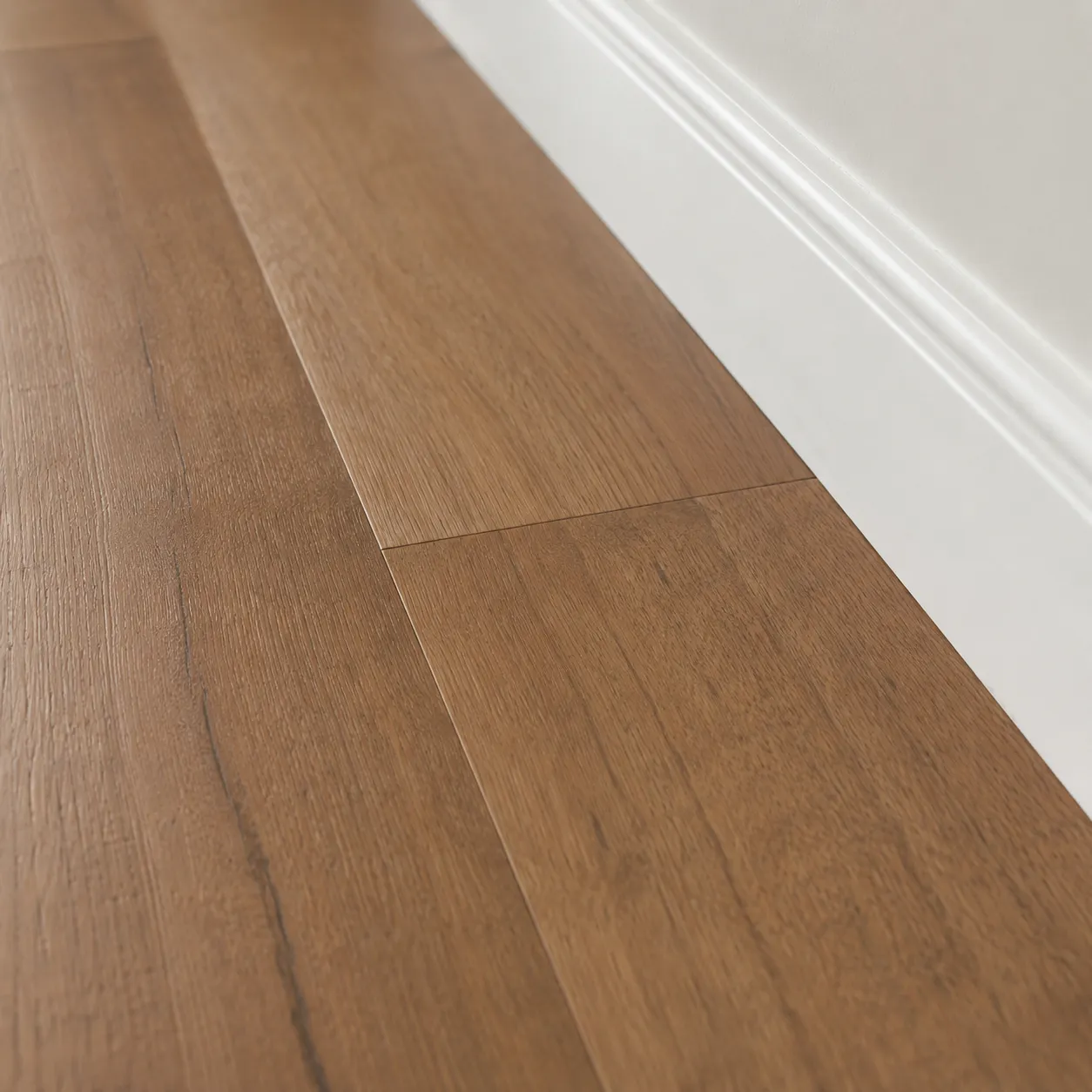
The little details are where quality shows
Up close, a well-installed timber floor shows consistent plank width, tight seams and a clean run into the skirting - the kind of detail that comes from proper acclimatisation and careful laying, not a rushed job.
Our Wood Flooring Installation Process
Here's what the project usually looks like from the first message to final inspection.
How long does installation take? A straightforward floating engineered-wood floor can often be laid in one to three working days once the room and material are ready. Solid hardwood, glue-down work, extensive subfloor repair or on-site sanding and sealing will take longer. Acclimatisation happens before laying and is confirmed for the selected product.
What we check on site: subfloor moisture and flatness, hollow or loose existing tiles, signs of damp, the room's air-conditioning pattern and the expansion space available at walls and transitions. These checks can change the installation method and final quotation.
Consultation and site assessment
Share your room photos, rough floor area, budget and timeline. At the visit, we assess the existing floor, moisture conditions and any condo requirements that affect the work.
Product selection and quotation
We compare solid hardwood and engineered options against the room, upkeep and budget, then quote the material, installation method and confirmed preparation work.
Acclimatisation and preparation
The material is acclimatised as its specification requires. We repair or level the base, remove loose sections and prepare the underlayment or adhesive system.
Installation and finishing
Planks are floated, glued or nailed using the agreed method, with expansion gaps at the edges. Skirting, transitions, stair nosing and any on-site finishing follow.
Final inspection
We walk through the finished floor with you, checking seams, transitions and overall finish before considering the job complete.
What to Prepare Before a Site Visit
A little preparation on your side helps us give you a more accurate quotation on the day.
Rough floor area
An approximate square footage of the rooms you're considering, even a rough estimate helps us prepare.
Budget range
Even a rough range helps us recommend solid hardwood, engineered wood or an alternative material realistically.
Management renovation guidelines
If you're in a condo or apartment, having your JMB/MC's renovation guidelines on hand helps us plan around noise-hour and acoustic requirements early.
Reference photos
Any species, tone or plank width you've seen and liked helps us narrow down options faster on the day.
Common Wood Flooring Mistakes to Avoid
Real timber rewards a little extra care during planning and installation - a few recurring mistakes cause most of the regret afterward.
Choosing solid hardwood without considering humidity
Rooms that alternate between open windows and heavy air-conditioning are harder on solid timber. Engineered wood is the safer call in that setting.
Skipping acclimatisation
Installing timber straight out of the box without letting it adjust to the room's temperature and humidity first can lead to movement and gapping shortly after installation.
Forgetting the expansion gap
Both products need a small perimeter gap so the boards have room to move. Without it, the floor can buckle or peak at the seams.
Not checking condo management approval first
Ordering material or booking installation before your JMB/MC has approved the work and confirmed acoustic requirements can mean costly delays or rework later.
Hiring an inexperienced installer
Uneven boards, poor seam alignment and incorrect nailing or gluing technique are workmanship issues that show up quickly and are expensive to fix after the fact.
When We Wouldn't Recommend Real Wood Flooring
Real timber is a strong fit for many homes, but it isn't the right answer for everything. These are the situations where we'd recommend something else.
Wet areas
Neither solid nor engineered wood is designed for standing water or constant humidity - a bathroom or any continuously wet area still calls for proper waterproofing and tiling instead.
Rooms with intense, sustained direct sun
Prolonged direct sunlight can fade and unevenly age a timber finish over time - a spot better suited to tile, SPC flooring, or one that needs curtains or UV film on the glazing regardless of flooring choice.
Low tolerance for upkeep
Real timber needs more careful cleaning than SPC, and solid hardwood periodically needs sanding and refinishing - if that upkeep isn't appealing, SPC flooring or laminate is a more practical fit.
Tight budget or fast turnaround
Real timber costs more and, for solid hardwood, needs acclimatisation time before installation. If budget or speed comes first, SPC flooring is the better fit.
Three Common Wood Flooring Scenarios
The air-conditioned condo unit
A couple renovating their first condo want a warmer floor through the living and dining area, but they also run the air-conditioning most evenings. Engineered oak gives them the timber surface they want and can float over the existing tiles once management approval and the acoustic underlayment are sorted.
The landed home going all-in on solid timber
A family updating the ground floor of a double-storey terrace wants solid hardwood from the entrance through to the dining room. Merbau suits the look and budget, so the planks are acclimatised, then nailed to a prepared subfloor with the right perimeter gaps.
The older home refresh
An older home already has solid hardwood, but the surface is dull and heavily scratched. Instead of replacing it, the timber is sanded and refinished, keeping the original floor while avoiding the cost of starting again.
Why Homeowners Work With Us for Wood Flooring
Getting the best out of real timber starts with careful planning - the right species, the right installation method and proper acclimatisation matter more here than with most other flooring materials.
Clear scope and detailed quotations
You'll know what material, installation method and finishing is included before work starts, not just a lump-sum number.
Honest advice on solid vs engineered
If solid hardwood doesn't suit the room, we'll say so upfront. The more expensive option is not automatically the better one.
Careful installation
Acclimatisation, expansion gaps and correct fixing method are handled properly, since these are what separate a floor that lasts from one that doesn't.
A transparent process
From the first site visit to the final inspection, you'll know what is happening at each stage. No unexplained gaps and no surprises at the end.
Real wood flooring pairs naturally with a full home renovation, updates to a living room design, or a double-storey terrace house renovation. If flooring is part of a larger renovation, it's usually easier to plan it alongside the skirting, paintwork and lighting rather than treating it as a standalone job. If real timber isn't the right fit for every room, SPC flooring is worth comparing for wet-prone or lower-maintenance areas, and you can see our full list of individual renovation services.
Wood Flooring Malaysia FAQs
What's the difference between solid hardwood and engineered wood flooring?
Solid hardwood is one piece of timber from top to bottom. Engineered flooring uses a real timber veneer over a plywood or composite core. Both look and feel like wood at the surface, but the layered core gives engineered boards better dimensional stability in Malaysia's climate.
Does timber flooring warp or expand in Malaysia's climate?
Solid hardwood can move as it absorbs and releases moisture, especially between humid outdoor air and dry, air-conditioned rooms. The result may be cupping, small gaps or movement at the edges. A cross-layered engineered core resists those changes better, which is why we often recommend it for air-conditioned Malaysian homes.
So is engineered wood flooring "fake" wood?
No. Its wear layer is real timber, commonly oak or walnut, finished much like solid wood. Only the core is different: plywood or composite layers underneath improve stability while the visible and tactile surface remains timber.
Can wood flooring be installed over existing tiles?
Often, if engineered wood is installed as a floating floor and the tiles are flat, sound and free of loose or hollow sections. Solid hardwood usually needs a compatible timber or prepared subfloor for glue-down or nail-down installation. Uneven or damaged floors must still be repaired before either product goes down.
How much does wood flooring cost in Malaysia?
Ballpark pricing is RM12-RM25 per sq ft for engineered wood, RM18-RM35 for local solid hardwood such as merbau or balau, and RM35-RM60+ for premium imported hardwood. These figures cover material and standard installation. Subfloor preparation, skirting and floor removal are normally separate.
Do I need management approval to install wood flooring in a condo?
Almost always. Management commonly asks for a renovation application and acoustic-underlayment details because hard flooring can transmit impact noise to the unit below. You may also need a deposit, loading-bay and lift bookings, lift protection and work within restricted hours. We can provide flooring details for the submission, but approval and timing remain with the JMB or MC.
Can real wood flooring be installed in the kitchen or bathroom?
Kitchens can work with engineered wood and a suitable finish if spills are wiped up promptly. Bathrooms are different: neither solid nor engineered boards are designed for standing water, so we would not use them inside a shower or wet bathroom zone.
Can solid hardwood floors be sanded and refinished later?
Yes. A worn solid hardwood floor can usually be sanded and refinished several times. Engineered boards may allow light sanding if the veneer is thick enough, but the manufacturer's specification determines whether that is possible and how many times it can be done.
What installation method is used for wood flooring?
The product and subfloor determine the method. Floating click-lock boards sit over underlayment and are common for engineered wood. Glue-down gives a firmer feel over a prepared base, while nail-down is the traditional solid-hardwood method and requires a compatible timber substrate.
Which rooms suit wood flooring best?
Living rooms, dining rooms, bedrooms, home offices and hallways are the best fits. Avoid full wet areas, and plan shading for rooms with strong sustained sunlight because UV exposure can fade the finish unevenly.
What timber species are commonly used for wood flooring in Malaysia?
Merbau, balau and chengal are common solid-hardwood choices: dense regional timbers that generally cost less than imported species. Engineered flooring most often uses oak or walnut veneers, offering lighter or richer tones over a more stable layered core.
How does wood flooring compare to SPC or laminate flooring?
Wood provides natural grain and texture, while solid boards also offer the greatest refinishing potential. SPC and laminate cost less and need less upkeep; SPC also has a waterproof core. Choose SPC when moisture resistance, speed or budget matters more than having a real timber surface.
How long does wood flooring last?
With reasonable care, solid hardwood can last several decades and go through multiple refinishing cycles. Engineered wood commonly lasts 20-30 years, depending on veneer thickness, core quality and maintenance. In the end, product quality and the conditions inside the room matter just as much as whether it's solid or engineered.
Ready to plan your wood flooring?
Send us a few photos of the room, your rough floor area and your budget. We'll help you compare solid hardwood, engineered wood and any better-suited alternatives.