











What Does Roof Repair & Waterproofing Cover?
For most landed homes in Malaysia, roof work usually involves repairs, re-roofing or waterproofing. Repairs can include replacing cracked or slipped tiles, resealing flashing where the roof meets a wall or parapet, clearing and fixing gutters, and treating rusty metal sheets.
Re-roofing involves removing part or all of the existing roof covering. This is common on older houses where the tiles have become brittle, and it is often the moment to replace battens, fix sagging trusses and add insulation underneath.
Waterproofing is needed for areas such as flat concrete roofs, gutters, balconies and external walls. These surfaces rely on a membrane or coating to keep water out; when that fails, water gets into the structure even if the roof itself is fine.
Which Roof Work Do You Need?
Most homeowners notice the symptom first. Here are a few common warning signs and what might be causing them.
A stain after heavy rain
Often a slipped or cracked tile, failed flashing or a blocked gutter. Usually a targeted repair.
Leaks that keep moving
When new leaks appear every season, the tiles may be brittle or the underlay gone. Replacing part or all of the roof may make more sense than paying for repeated repairs.
Sagging ceiling or roofline
May be caused by wet or termite-damaged trusses. The structure should be checked before the roof covering is replaced.
Damp inside an external wall
May be caused by water getting through cracks or porous render. The usual approach is crack repair, external wall waterproofing, then repainting.
Fix the structure, not just the surface
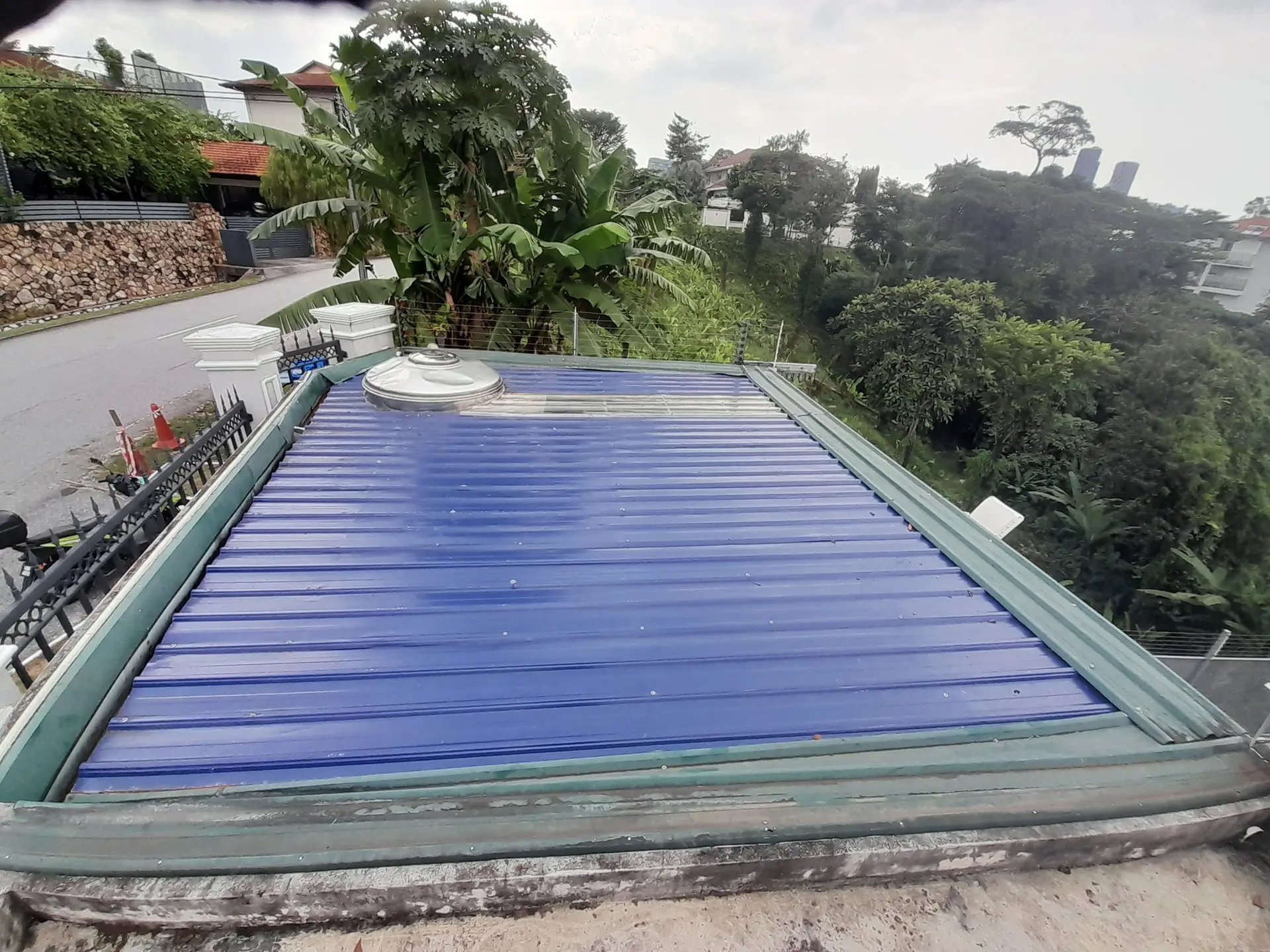
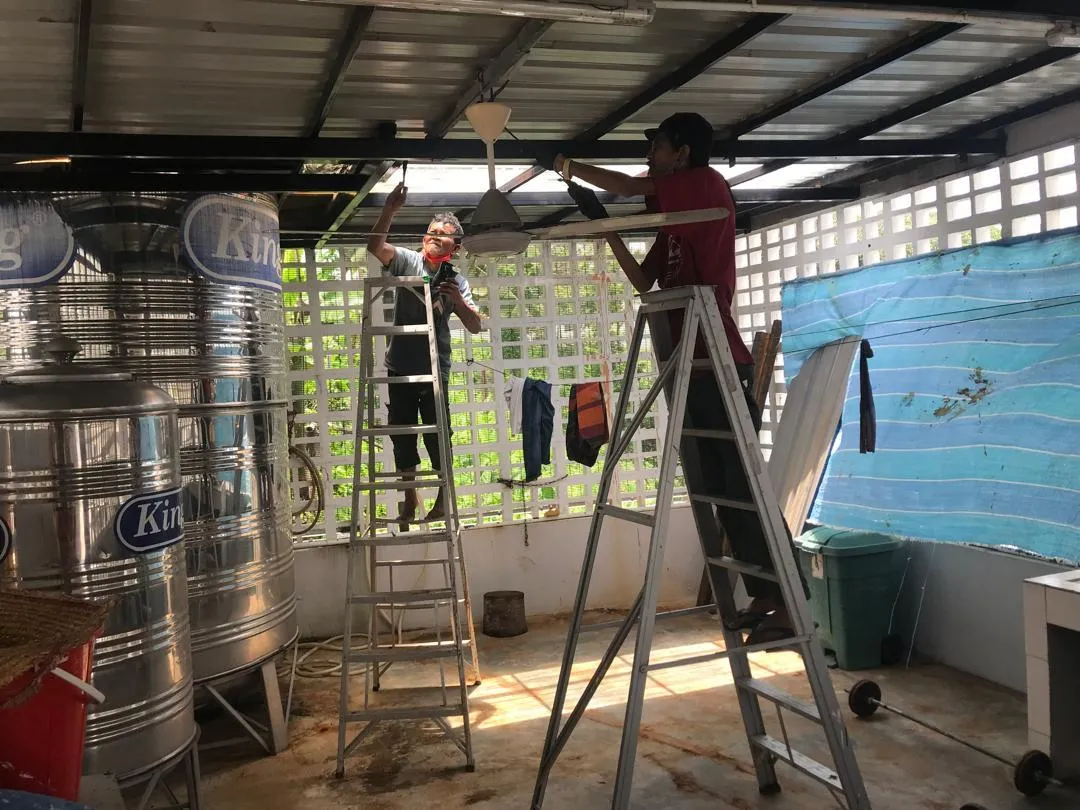
On our Taman Duta, Bukit Tunku roof project, the damaged roof structure was repaired and replaced before the new covering went on, including access around the skylight and water tank.
Roof and Waterproofing Work in Detail
Roof tile and sheet repair
Best for: isolated leaks on a roof that is otherwise in fair condition.
Not every leaking roof needs replacing. If the rest of the roof is still in good condition, we can replace damaged tiles, repair loose sections and fix metal sheets that have started rusting. Ridge and hip lines are re-pointed if the mortar has cracked.
Re-roofing
Best for: older roofs with brittle tiles, repeated leaks or a planned renovation.
The old covering comes off so battens, trusses and underlay can be checked and replaced. Concrete tiles, clay tiles and metal roofing are all options. Adding insulation at this stage can make the rooms below noticeably cooler.
Flashing, gutters and skylights
Best for: leaks where the roof meets a wall, parapet, skylight or water tank.
Many leaks come from the joints, not the tiles. Flashing is resealed or replaced, gutters are cleared, re-sloped or replaced, and skylights are re-flashed so water runs past them.
Roof, gutter and wall waterproofing
Best for: flat concrete roofs, concrete gutters, balconies, planters and external walls.
Cracks are repaired first, then a waterproofing membrane or coating is applied and lapped up the edges. External walls get a waterproof coating before repainting. For wet areas inside the house, see bathroom waterproofing.
New roofs for extensions, porches and yards
Best for: covering a new extension, car porch or back yard.
The new roof has to tie into the old one without creating a new leak point. For porch and canopy roofs, polycarbonate usually runs around RM20–RM35 per sq ft and metal deck around RM30–RM50 per sq ft.
See house extension and car porch renovation.
What Affects the Cost of Roof Work
It’s difficult to give an accurate price without checking the roof first.
Roof area and shape
A simple gable roof is quicker to work on than a roof with many hips, valleys and junctions.
Height and access
Double-storey roofs, steep pitches and tight side access need more safety equipment and time.
Roof material
Concrete tile, clay tile and metal roofing differ in material cost and in how they are fixed.
Condition of the structure
Rotten battens, termite damage or sagging trusses add carpentry work before the covering goes back.
Flashing and gutters
Parapets, skylights, water tanks and long gutter runs add detail work that a plain roof doesn't need.
Waterproofing system
Flat roofs and walls need crack repair and a membrane or coating suited to how much water and sun they get.
Because so much depends on what's under the tiles, we generally can't give an accurate price from photos alone. An inspection lets us check the covering, the structure and the roof space, which is usually the difference between a rough guess and a quote you can plan around.
Our Roof Repair & Waterproofing Process
Send photos
Share photos of the stain, the leak and the roof if you can safely see it, plus your property type and location.
Inspection
We check the roof covering, flashing and gutters from outside and the roof space from inside to trace where the water is getting in.
Itemised quotation
The quote lists repair, re-roofing, structural and waterproofing items separately, so you can see what is essential and what can wait.
Repair or re-roof
Damaged structure is fixed first, then the covering, flashing and gutters. Waterproofing is applied after crack repair and surface preparation.
Check after rain
Where possible we check the repaired area after rain, then hand over so ceilings and painting inside can go ahead.
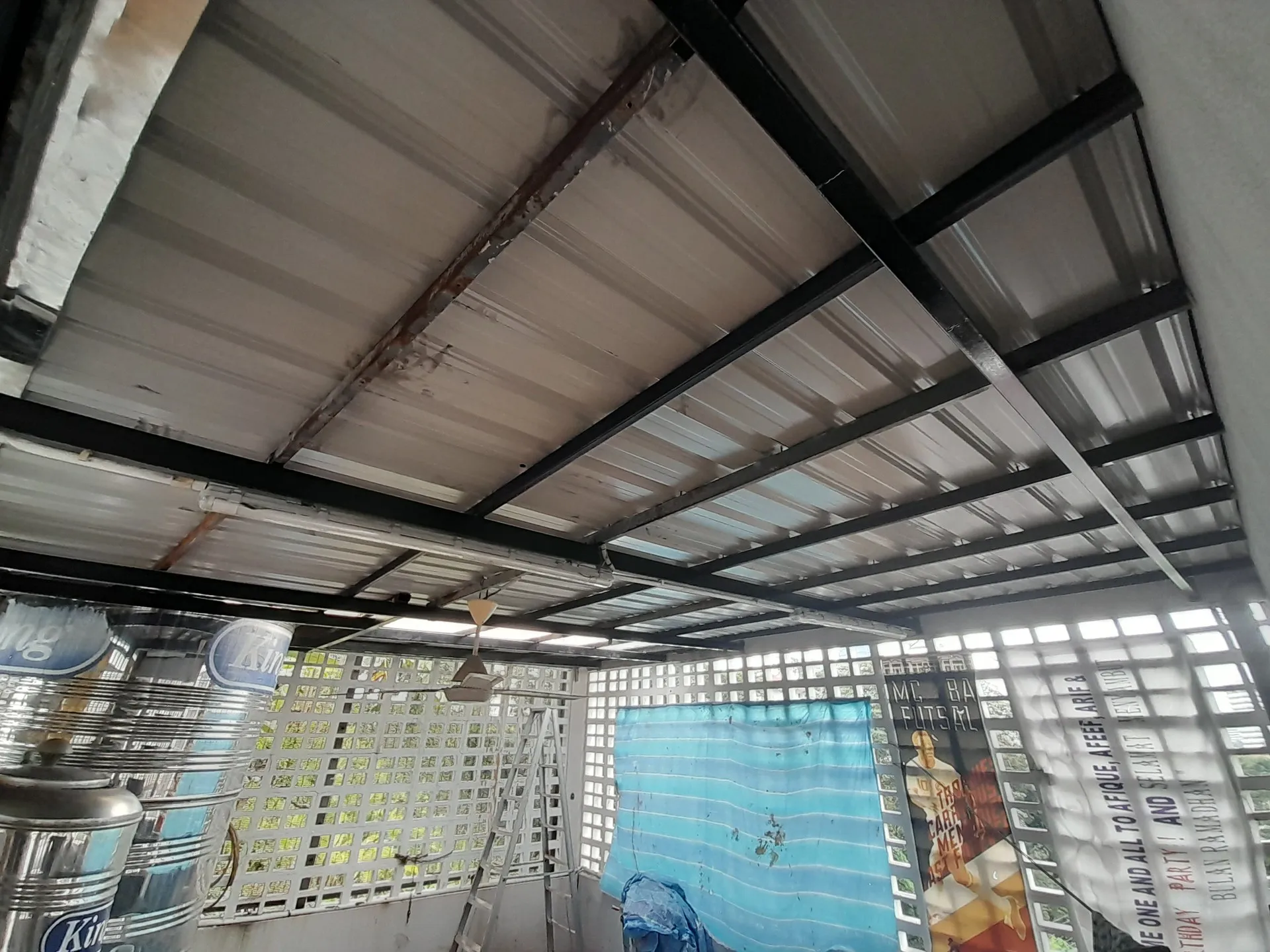
Checking the Roof Structure Before Re-Roofing
Once the trusses and battens are sound, the new roof covering can be laid and flashed properly, so the ceilings and paint inside stay dry.
Common Roof Repair Mistakes
Patching the ceiling before fixing the leak
A new ceiling board or a coat of paint hides the stain for a while, but the water keeps coming. Fix the roof first.
Sealing everything with sealant
Smearing sealant over cracked tiles or flashing can stop a leak for one season. It often traps water and makes the proper repair harder later.
Ignoring the trusses
Replacing tiles on top of rotten or termite-damaged timber means doing the job twice. It's worth checking the roof space before the covering goes back on.
Skipping the waterproofing on flat areas
Concrete gutters, flat roofs and planter boxes need a proper membrane lapped up the sides. Paint-on coatings that stop at the edge tend to fail at the joints.
Three Common Roof Repair Scenarios
The bedroom stain after every storm
If an older terrace house gets a brown patch on the bedroom ceiling after heavy rain, the cause might be cracked tiles or failed flashing at the party wall. The repair can involve replacing the tiles and redoing the flashing before the ceiling is patched and repainted.
The roof that keeps leaking in new places
If a 30-year-old semi-D has brittle concrete tiles and new leaks every monsoon, re-roofing can make more sense than chasing each one. The work may include replacing rotten battens, adding underlay and insulation, then relaying the covering.
The damp wall in the living room
If paint keeps peeling on the inside of an external wall, hairline cracks in the render outside may be letting rain in. The usual approach is to repair the cracks, apply a waterproof coating and repaint the wall once it is dry.
Why Homeowners Choose Us for Roof Work
Cause first, then the fix
We trace where the water is getting in before recommending a repair, a re-roof or waterproofing.
Itemised quotations
Repair, structural and waterproofing items are listed separately, so you know what you're paying for.
CIDB-registered contractor
My Reno Service is run by Roomah Builders, a CIDB-registered contractor based in Petaling Jaya.
Inside and outside together
We can fix the roof, carry out any waterproofing work and repair damaged ceilings and paintwork, so you don’t have to coordinate separate contractors.
Roof work often goes hand in hand with a new plaster ceiling, repainting or a house extension. See all our renovation services.
Roof Repair & Waterproofing FAQs
How do I know where my roof is leaking?
The stain on the ceiling is often not directly under the leak. Water can run along a truss or the underside of the roof before it drips. A site visit usually means checking the roof covering, flashing and gutters from outside and the roof space from inside, ideally after rain.
Can a roof leak be fixed without replacing the whole roof?
Often, yes. Cracked or slipped tiles, failed flashing around a parapet or skylight and blocked gutters can usually be repaired on their own. Re-roofing a section or the whole roof makes more sense when the tiles are brittle, the leaks keep moving or the timber underneath has rotted.
Do you replace roof trusses?
Yes. Timber trusses and battens that have been wet for a long time can rot or sag, and termites are a common problem in older houses. Damaged members are replaced or strengthened before the roof covering goes back on, as we did on our Bukit Tunku roof project.
What is the difference between roof repair and waterproofing?
Roof repair fixes the roof covering and the structure: tiles, sheets, flashing, gutters and trusses. Waterproofing adds a membrane or coating to areas that hold or shed water, such as flat concrete roofs, roof gutters, planter boxes, balconies and external walls.
Do you waterproof external walls?
Yes. Damp patches, peeling paint and mould on the inside face of an external wall are often caused by water getting through cracks or porous render. The usual fix is repairing the cracks and applying a waterproof coating on the outside, followed by repainting.
Should I fix the roof before renovating the inside?
Yes. If water is still getting in, new ceilings, paint and built-in cabinets can be damaged within a few rainy seasons. It's usually best to sort out the roof and any waterproofing first, then do the plaster ceiling and painting.
Can you add a skylight or roof over an extension?
Yes. A new roof over an extension, porch or yard has to tie into the existing roof without creating a new leak point, and skylights need proper flashing. Material choice depends on the span, the look you want and how much heat you can tolerate underneath.
How much does roof repair cost?
It depends on the roof area, the material, how high and accessible the roof is, and whether the trusses need work. Small patch repairs cost far less than re-roofing, which is why we inspect before quoting. For porch and canopy roofs, polycarbonate usually runs around RM20–RM35 per sq ft and metal deck around RM30–RM50 per sq ft.
Do I need approval for roof work?
Repairs that keep the same roof shape usually don't. Changing the roof structure, raising it or roofing over a new area can need council approval and sometimes an engineer, and for strata landed properties the management may have rules too. We'll flag this during the site visit.