
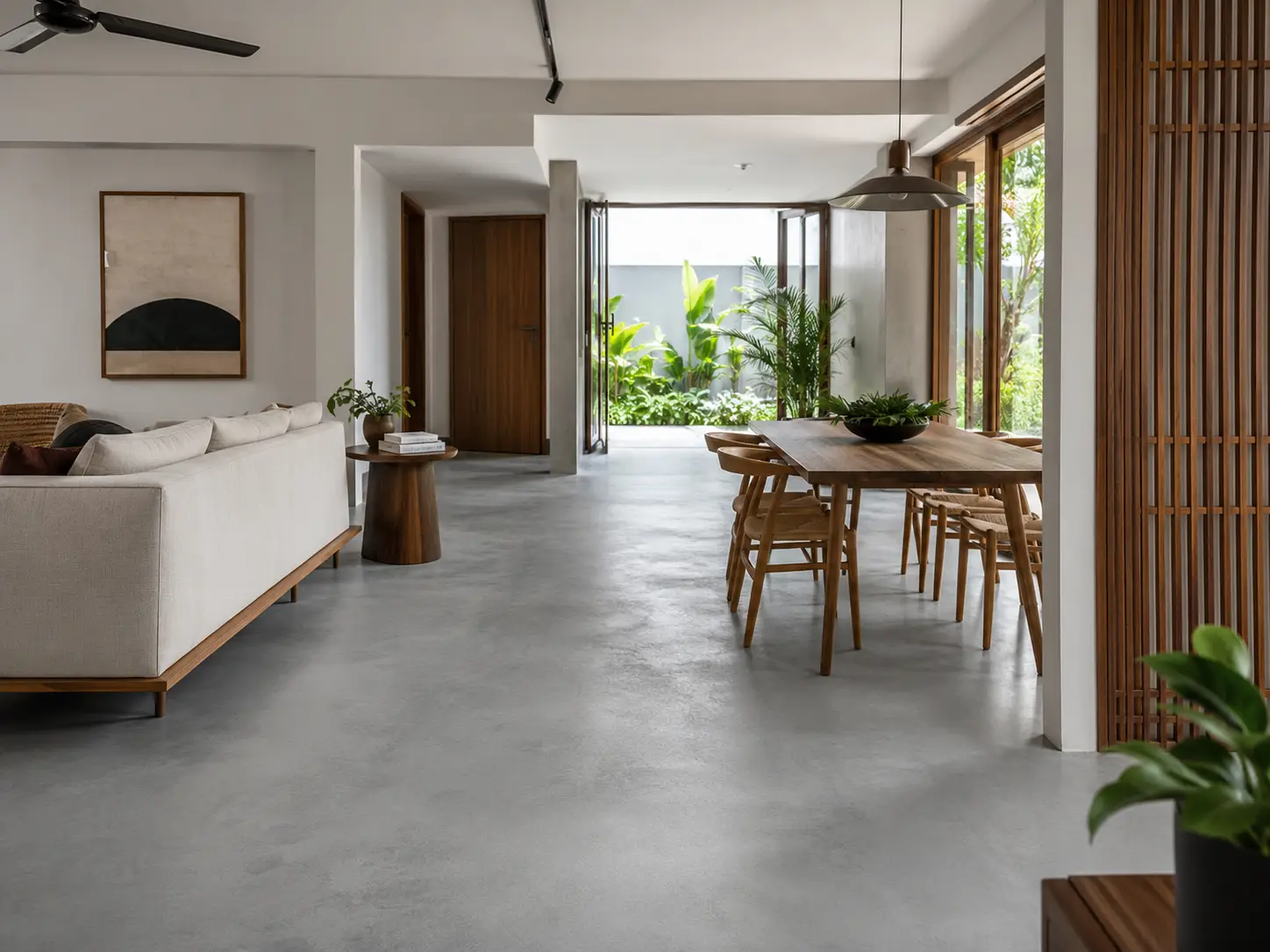
Cement Screed Flooring in Kuala Lumpur & Selangor: The Minimalist, Industrial Look
Cement screed has moved beyond its old job as a subfloor prep layer - trowelled, power-floated or polished smooth and left exposed, it's become a genuine flooring finish in its own right, popular for the seamless, minimalist and industrial look it gives car porches, dry kitchens, utility areas and, more recently, entire living spaces. My Reno Service installs and finishes cement screed flooring for landed homes, condos and apartments across KL, Selangor and the wider Klang Valley.
Whether you're after a plain broom-finish exterior floor or a polished, stained interior look, the right approach depends on the finish level you want, the room it's going into and how the existing substrate is prepared underneath.
Send us photos of the space and the look you're going for - raw industrial, polished and glossy, or something in between - and we'll help you work out what's realistic for that surface before you commit to a finish.
Cement Screed Flooring at a Glance
- Typical cost
- RM6–RM35+ per sq ft, depending on finish and preparation.
- Timeline
- Usually 1–3 days to lay, then at least 1–2 weeks to cure before normal use.
- Best for
- Car porches, utility areas, dry kitchens and design-led industrial interiors.
- Avoid if
- You want a warm, cushioned floor, a very fast installation or no risk of hairline cracks.
We cover Kuala Lumpur and nearby areas including Petaling Jaya, Cheras, Kepong, Shah Alam, Subang Jaya, Puchong and Klang.
What Is Cement Screed Flooring?
Cement screed is a sand-cement mix laid over a slab or existing floor and trowelled or power-floated smooth. Traditionally it's a levelling layer that gets covered by tiles, vinyl or timber - but the same material can also be left exposed as the finished floor, sometimes sealed, stained, dyed or ground back for a polished decorative concrete look.
What people really like is the uninterrupted surface. Without grout lines breaking it up, the floor feels cleaner, calmer and more minimalist. It reads as intentional rather than unfinished when it's done properly.
In Malaysia, car porches, dry kitchens and utility areas remain the familiar choices. More homeowners are now using screed in living rooms and whole units too, usually for a design-led loft-style or industrial look, not simply to save money.
Why Cement Screed Flooring Is Catching On
There are a few practical and design reasons why more Malaysian homeowners are choosing exposed screed, not just for car porches and utility spaces.
The seamless, no-grout look
Without grout lines breaking up the surface, a screed floor reads as one continuous plane, which suits the minimalist interiors many homeowners and designers are chasing right now.
The industrial, loft-style aesthetic
Raw finishes have become a design style in their own right. Exposed screed, concrete-look surfaces and minimal trims all belong naturally in that palette.
Lower cost at the basic end
A plain broom-finish screed is one of the more affordable flooring finishes available, which is a big part of why it's the default budget choice for car porches and utility areas.
Genuinely hardwearing
Vehicle weight, foot traffic and daily wear are all manageable once the floor has cured and been sealed properly. That makes it a dependable choice for busier exterior and utility spaces.
Easy to hose down and clean
Once it's sealed, cleaning becomes surprisingly easy. Outdoor floors can be hosed down quickly, with no grout lines to trap oil or grime.
Design flexibility at the higher end
If plain grey isn't your thing, the floor can be stained or dyed before sealing. Polishing then changes the sheen, giving one base material a much wider range of looks.
Cement Screed Finish Levels
The finish makes the biggest difference. How the surface is worked after laying decides whether it feels like a practical utility floor or a polished design feature.
| Finish level | Look | Typical cost | Best for |
|---|---|---|---|
| Plain / broom-finish | Matte, lightly textured, natural grey | RM6–RM10 / sq ft | Car porches, back yards, utility areas |
| Power-floated / burnished | Smoother, denser, subtle sheen | RM10–RM18 / sq ft | Dry kitchens, indoor utility spaces |
| Polished, sealed, stained or dyed | Glossy or satin, even tone or decorative colour | RM18–RM35+ / sq ft | Living rooms, feature floors, whole-unit loft look |
Plain / Broom-Finish Screed
Best for: car porches, back yards and utility areas where slip resistance and cost matter more than a polished look.
A light broom or brush pass leaves subtle texture underfoot. This is the most affordable finish and the usual exterior choice because the texture adds grip when wet.
Sealing still matters for stain resistance. The goal is a clean, hardwearing surface, not a decorative polish.
Power-Floated / Burnished Screed
Best for: dry kitchens and indoor utility spaces wanting a smoother, more finished surface without the cost of full polishing.
A mechanical power float compacts and smooths the surface more evenly than hand trowelling, creating a denser finish with a subtle sheen. In look and cost, it sits between broom-finished and fully polished screed.
For many indoor renovations, this ends up being the sweet spot: intentional-looking, easy to clean and free of the extra grinding stages needed for a full polish.
Polished, Sealed, Stained or Dyed Screed
Best for: living rooms, feature areas and whole-unit renovations with a loft-style or decorative concrete look.
The screed is ground to a satin or gloss sheen, then sealed. Staining or dyeing before sealing can shift the natural grey toward a warmer or more saturated tone.
This is the highest-cost, highest-skill option. Uneven grinding or blotchy sealer is obvious on a glossy surface, so it works best as a deliberate design feature.
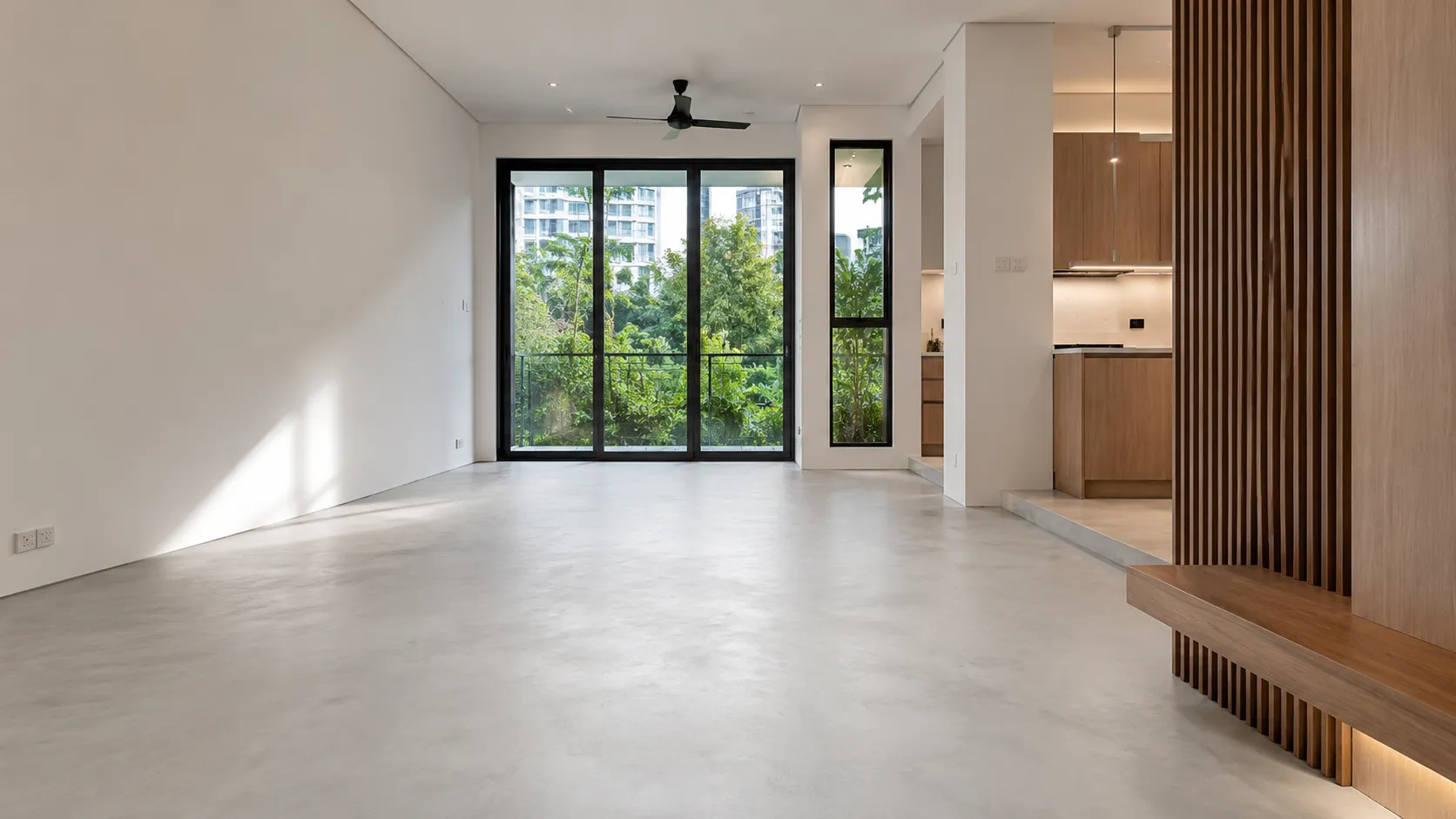
Increasingly, it's the whole living space
A seamless, sealed screed floor running from the living area through to an open kitchen and outdoor patio gives a condo unit the loft-style, no-grout-lines look that's driving much of the interest in screed beyond its traditional car porch and utility roots.
Where Cement Screed Flooring Works
These days you'll see screed in far more places than just the car porch, though some rooms still suit it better than others.
Car porches
The most established use - a hardwearing, weather-resistant, easy-to-hose-down surface that handles vehicle weight and constant sun and rain exposure.
Dry kitchens and utility areas
A practical, low-maintenance surface for high-use utility spaces that may see occasional moisture, where durability matters more than a decorative finish.
Living rooms and whole units
A growing design choice for loft-style or minimalist interiors, usually finished with a polished or sealed surface instead of a plain broom texture.
Studios and home offices
A neutral, low-distraction backdrop that suits work or creative spaces where a warmer flooring finish isn't the priority.
Outdoor patios and walkways
Sealed and given a slip-resistant finish, screed extends naturally from an exterior car porch into a back patio or side walkway for a consistent exterior look.
Retail and F&B fit-outs
Beyond homes, the industrial screed look is common in cafes and small retail units wanting a raw, minimalist feel without the cost of natural stone.
Cement Screed vs SPC vs Ceramic Tile vs Timber
Screed isn't a drop-in replacement for other flooring - it trades some comfort and installation ease for a distinct look and a hardwearing surface. Here's how it generally compares at a high level.
| Factor | Cement screed | SPC flooring | Ceramic / porcelain tile | Timber |
|---|---|---|---|---|
| Durability | Very durable when cured and sealed properly | Dent and scratch resistant | Very durable, but grout can stain or crack | Durable but can scratch and dent |
| Underfoot feel | Hard and cool, no cushioning | Warmer, some cushioning | Hard and cold | Warm, slightly forgiving |
| Installation | Wet-laid, needs proper curing time | Floating click-lock, fast | Requires hacking, screeding and grouting | Nailed, glued or floated depending on type |
| Over existing tiles | Generally no - needs a prepared substrate | Often yes, if flat and sound | No - existing floor typically comes out | Sometimes, depending on subfloor |
| Maintenance | Sweep and damp mop; reseal periodically | Sweep and damp mop | Grout needs periodic cleaning or resealing | Avoid excess water; periodic refinishing |
| Cost range | RM6–RM35+ / sq ft depending on finish | RM5–RM18 / sq ft | Mid-range material plus higher install cost | Mid to premium, varies widely by species |
Cement Screed
Very durable once cured and sealed, but hard and cool underfoot with no cushioning. Wet-laid, needs proper curing time, and generally can't go over existing tiles. RM6–RM35+ / sq ft depending on finish.
SPC Flooring
Dent and scratch resistant, warmer with some cushioning underfoot. Floating click-lock installation that's fast and can often go straight over existing tiles if flat and sound. RM5–RM18 / sq ft.
Ceramic / Porcelain Tile
Very durable, though grout can stain or crack over time, and it's hard and cold underfoot. Installation means hacking, screeding and grouting, and the existing floor typically has to come out. Mid-range material plus higher install cost.
Timber
Durable but can scratch and dent, with a warm, slightly forgiving feel underfoot. Nailed, glued or floated depending on the type, with periodic refinishing to plan for. Mid to premium, varies widely by species.
So, What Does It Actually Cost?
Think of these as ballpark figures per square foot. The actual price depends on the substrate, total area and finish you choose.
RM6–RM10 / sq ft
Best for: car porches, back yards and utility areas. Plain, broom-finish screed with a light texture and basic sealing.
RM10–RM18 / sq ft
Most popular: power-floated or burnished screed with a smoother, denser surface - the common choice for dry kitchens and indoor utility spaces.
RM18–RM35+ / sq ft
Best for: living rooms and feature areas wanting a loft-style statement floor. Polished, sealed, stained or dyed decorative screed.
Indicative KL & Selangor pricing, reviewed 2026. These figures cover material and standard labour only. Not included: breaking out and removing an existing floor, substrate repair, control joint cutting and specialist sealing or staining. Final pricing depends on site condition and is confirmed during a site visit.
Factors That Affect Cement Screed Flooring Cost
The finish is only part of the cost. Substrate condition, floor area and the work needed before sealing can have just as much impact on the final quotation.
Total floor area
The larger the area, the more material and labour required, though a bigger job often costs less per square foot than a very small one due to fixed setup and equipment costs.
Existing surface condition
Old tiles or a damaged slab commonly need to come out and the substrate repaired before new screed goes down, which adds cost compared to laying over an already-bare, sound slab.
Grinding and polishing stages
A polished finish requires multiple grinding passes with progressively finer discs, which takes more time and skill than a single power-float pass - and shows up in the price.
Control and expansion joints
Larger areas need joints cut at regular intervals to control cracking, and outdoor areas need expansion joints for temperature movement - both add labour but are essential, not optional.
Staining or dyeing
Moving beyond natural grey to a stained or dyed base colour adds a material and labour step before sealing, and even coverage takes a practised hand.
Sealer type and coats
A basic sealer is cheaper than a higher-performance topical or penetrating sealer, and more coats mean more durability but also more labour and drying time between coats.
Because so much of the final cost depends on what's underneath the existing floor and how much substrate repair is needed, we generally can't give an accurate number without seeing it first. A site visit lets us check the slab and existing surface properly, which is usually the difference between a rough estimate and a quotation you can actually plan around.
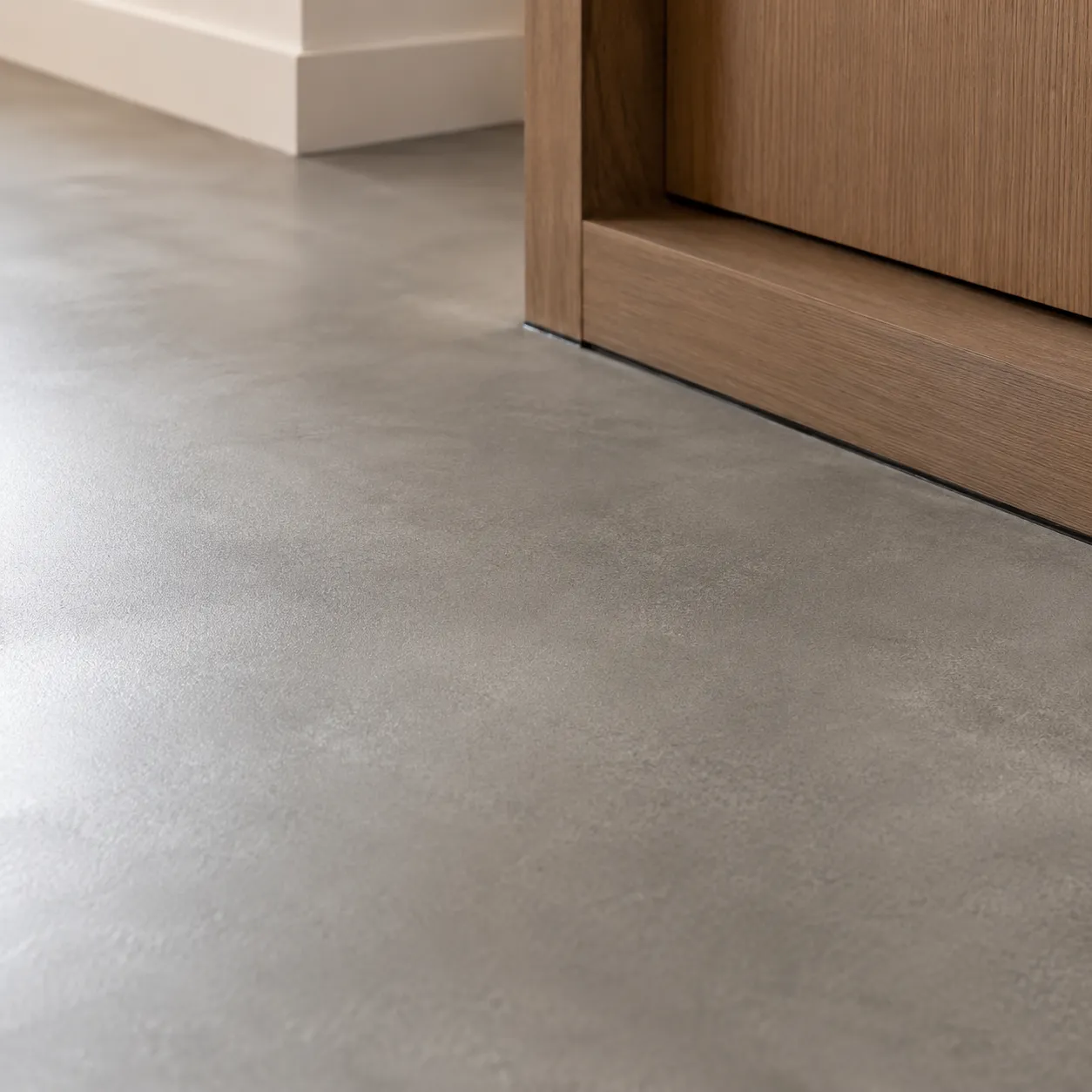
The finish is what makes or breaks the look
Up close, a well-finished screed floor shows a smooth, even surface with no grout lines and a clean run into the skirting. That level of detail only shows up when none of the earlier stages were rushed.
Our Cement Screed Flooring Process
Here's what the project usually looks like from the first message to final inspection.
Initial consultation
Share your space photos, rough floor area and the finish level you're considering, along with your budget range and timeline.
Site visit
We check the existing surface, slab condition and drainage falls where relevant, before anything is priced.
Substrate preparation
Existing tiles or damaged surfaces are broken out and removed, and the base is repaired or levelled as needed before screed can go down.
Quotation
A detailed quotation is prepared based on the confirmed finish level, substrate prep and any joint cutting or sealing requirements.
Screed laid
The sand-cement mix is laid, levelled and trowelled or power-floated to the agreed finish, with control joints cut at the appropriate intervals.
Curing
The floor is left to cure properly before further work, which takes patience - rushing this stage is one of the main causes of later cracking.
Grinding, staining and sealing
For polished or decorative finishes, the floor is ground back in stages, optionally stained or dyed, then sealed to protect the surface and lock in the look.
Final inspection
We walk through the finished floor with you, checking the surface, joints and overall finish before considering the job complete.
Common Cement Screed Flooring Mistakes to Avoid
Screed is a forgiving material at the plain-finish end, but a few recurring mistakes cause most of the regret afterward.
Rushing the curing time
Walking on it too soon, sealing it too early or letting it dry out too fast are among the most common causes of hairline shrinkage cracking and a surface that never quite hardens properly.
Skipping control joints
Without joints at regular intervals, larger areas are far more likely to develop random cracks. Planned joint lines give that movement somewhere controlled to happen.
Leaving it unsealed
A bare screed floor stains easily from oil, food and general foot traffic. Skipping sealing to save a bit of cost often means a patchy, discoloured floor within a year or two.
Choosing a high-gloss polish for a wet exterior area
A glass-smooth polished finish can get genuinely slippery when wet, which is a poor match for a car porch or open patio. Those areas call for a broom or lightly textured finish instead.
Hiring an inexperienced installer for a polished finish
Uneven grinding, blotchy staining and inconsistent sheen are workmanship issues that show up clearly on a glossy surface - one of the areas where a lack of experience becomes obvious quickly.
When We Wouldn't Recommend Cement Screed Flooring
Screed is a strong fit for the right room and the right expectations, but it isn't the right answer for everything. These are the situations where we'd usually steer a homeowner toward a different material instead.
Wanting a warm, soft feel underfoot
Screed is a hard, cool surface by nature. If a warmer, more cushioned floor for a bedroom or living room is the priority, SPC flooring or real wood flooring is generally a better fit.
A tight renovation timeline
Between laying, curing and any grinding or sealing stages, screed takes considerably longer than a floating floor. If the timeline is measured in days, choose another material.
Not wanting to disturb the existing floor
Because screed generally needs a prepared substrate, laying it, in most cases, means removing what's already there first. If avoiding that disruption matters, a floating floor over the existing surface is the easier route.
Zero tolerance for any hairline cracking
Even a well-executed screed floor can develop the occasional fine hairline crack over time. If any visible cracking at all is unacceptable, a tiled or engineered wood finish is a more predictable choice.
Three Common Cement Screed Flooring Scenarios
The car porch refresh
A terrace house's original cement floor has stained oil marks and hairline cracks. It gets broken out and redone with a broom-finish screed, jointed correctly and sealed. A straightforward, budget-conscious fix.
The industrial-look dry kitchen
A homeowner renovating a condo dry kitchen wants a raw, minimalist finish to match exposed shelving and matte cabinetry. A power-floated, sealed screed floor replaces the original tiles for a clean, seamless surface.
The loft-style living room
A landed home's living and dining area gets a full loft-style makeover. The existing tiles come out, and a polished, lightly stained screed floor becomes a deliberate feature, not a budget shortcut.
Why Homeowners Work With Us for Cement Screed Flooring
A screed floor looks simple once it's done, but getting there depends on proper substrate prep, correctly placed joints and enough patience for a full cure - none of which show up in a rushed quote.
Clear scope and detailed quotations
You'll know what substrate prep, finish level and sealing is included before work starts, not just a lump-sum number.
Honest advice on whether screed fits the room
If a warmer, softer floor like SPC suits the space better, we'll say so upfront. The room and your priorities come first.
Careful curing and jointing
Control joints, curing time and sealing stage are handled properly, since these are what separate a floor that lasts from one that cracks early.
A transparent process
From the first site visit through to final inspection, you'll know what's happening at each stage. No unexplained gaps and no surprises at the end.
Cement screed flooring pairs naturally with a broader car porch renovation, a full condo renovation, or as part of an interior update alongside SPC flooring elsewhere in the unit - the easiest approach is to plan flooring room by room. One material rarely suits the whole property. If you're weighing this against other standalone upgrades, see our full list of individual renovation services.
Cement Screed Flooring Malaysia FAQs
What is cement screed flooring, exactly?
Think of it as a sand-cement mix laid over a slab or existing floor, then trowelled or power-floated smooth. Instead of covering it with tiles, vinyl or timber, the screed itself becomes the visible floor. It can be sealed, polished or dyed to create the finished surface this page covers.
How much does cement screed flooring cost in Malaysia?
Ballpark figures start around RM6-RM10 per sq ft for a plain broom finish, RM10-RM18 per sq ft for a smoother power-floated or burnished finish, and RM18-RM35+ per sq ft for polished, sealed or stained decorative screed. These figures cover material and standard labour only. Substrate prep, joint cutting and specialist sealing are usually quoted separately, and the final number depends on the site condition.
Does cement screed flooring crack?
It can, mainly hairline shrinkage cracking as the screed cures, and the risk rises when the mix, curing time or control joints aren't handled properly. Cutting control joints at regular intervals, curing the screed slowly so it doesn't dry too fast, and using a reasonable bay size all help. A few fine hairline cracks are common even on a well-done screed floor and are usually cosmetic, not structural.
Does the floor need to be sealed or can it be left bare?
Sealing is strongly recommended for any screed floor that's actually going to be lived on. Bare, unsealed screed is porous, so it stains easily from oil, coffee, cooking splashes and even foot traffic over time, and it dusts on the surface as it wears. A penetrating or topical sealer closes up the surface, makes it far easier to clean, and is essentially required if you want a polished or stained/dyed look to hold its colour and sheen.
Is cement screed flooring comfortable to walk on?
Expect a hard, cool surface underfoot, closer to tile or bare concrete than SPC or timber. Some homeowners like that coolness in Malaysia's climate, especially in a car porch, dry kitchen or utility area. For cushioning and warmth in a living room or bedroom, a floating floor like SPC is usually a better fit.
Can cement screed be laid directly over existing tiles?
Generally no, and this is one of the real differences from SPC flooring. Screed needs a properly prepared substrate to bond to and cure against. Laid straight over glazed tiles, it's prone to poor adhesion, cracking and delamination. Existing tiles usually need to come out, or at minimum be roughened and primed, before a new screed floor goes down, which adds cost and time compared to a floating floor installed on top of what's already there.
Is cement screed flooring suitable for a car porch?
Yes - the car porch is one of the most common places for exposed screed flooring in Malaysia. The industrial look suits an exterior, high-traffic area, and the material handles vehicle weight well. It should still be properly sealed and given a slightly textured or broom finish; a glass-smooth polish can get slippery when wet.
How do you clean and maintain a cement screed floor?
Day to day, a sweep and a damp mop is usually enough, similar to tile. Screed is porous unless sealed, so wipe up oil, wine and acidic spills promptly instead of leaving them to sit. A sealed floor handles normal cleaning products well; an unsealed one stains much more easily. Resealing intervals depend on foot traffic.
Is cement screed flooring the same as polished concrete?
They're closely related but not always identical. "Polished concrete" often refers to grinding and polishing an existing structural concrete slab itself, exposing the aggregate underneath. A polished cement screed is a separate topping layer poured on top of a slab or existing floor and then ground and polished, which gives more control over thickness, colour and finish but is a different build-up. In everyday conversation in Malaysia the two terms get used fairly interchangeably for a similar overall look.
Do I need condo or JMB/MC management approval to install screed flooring?
In most condos and apartments, yes. Screed work involves wet trades, grinding or polishing noise, and sometimes floor build-up changes. Those usually fall under the renovation approval process set by the JMB or management corporation, including plan submission and permitted working hours. Check the building's renovation guidelines and get sign-off before work starts; this is a wetter, more disruptive trade than a quick floating-floor swap.
What's the difference between cement screed and SPC flooring?
The biggest difference is how each one is installed and how forgiving it is of what's already there. SPC is a floating click-lock floor that can often go straight over existing tiles with no wet work involved, and it's warmer and softer underfoot. Screed is a wet-laid, bonded finish that generally needs the substrate exposed and prepared first, takes longer to cure, and gives a harder, cooler, seamless look that SPC's plank format can't fully replicate.
Can cement screed flooring be used outdoors?
Yes. Car porches, outdoor patios and covered walkways are common applications, provided the floor is sealed against weather and has enough grip when wet. A broom or lightly textured finish works better here than a high-gloss polish. Exterior screed also needs correctly placed expansion joints to handle temperature movement over a larger area.
How long does cement screed flooring take to install and cure?
Laying the screed itself typically takes one to a few days depending on the area, but curing is the part that takes patience - a screed floor generally needs at least a week or two before it can take normal foot traffic, and longer again before sealing, staining or polishing should happen, since sealing too early can trap moisture. Rushing the cure time is one of the most common causes of later cracking.
Ready to plan your cement screed floor?
Send us a few photos of the space, your rough floor area and your budget range. We'll help you understand what's realistic - including whether the existing surface needs to be broken out first - before you commit to a finish.